Auracast & LE Audio:
Hearing in Public, Upgraded
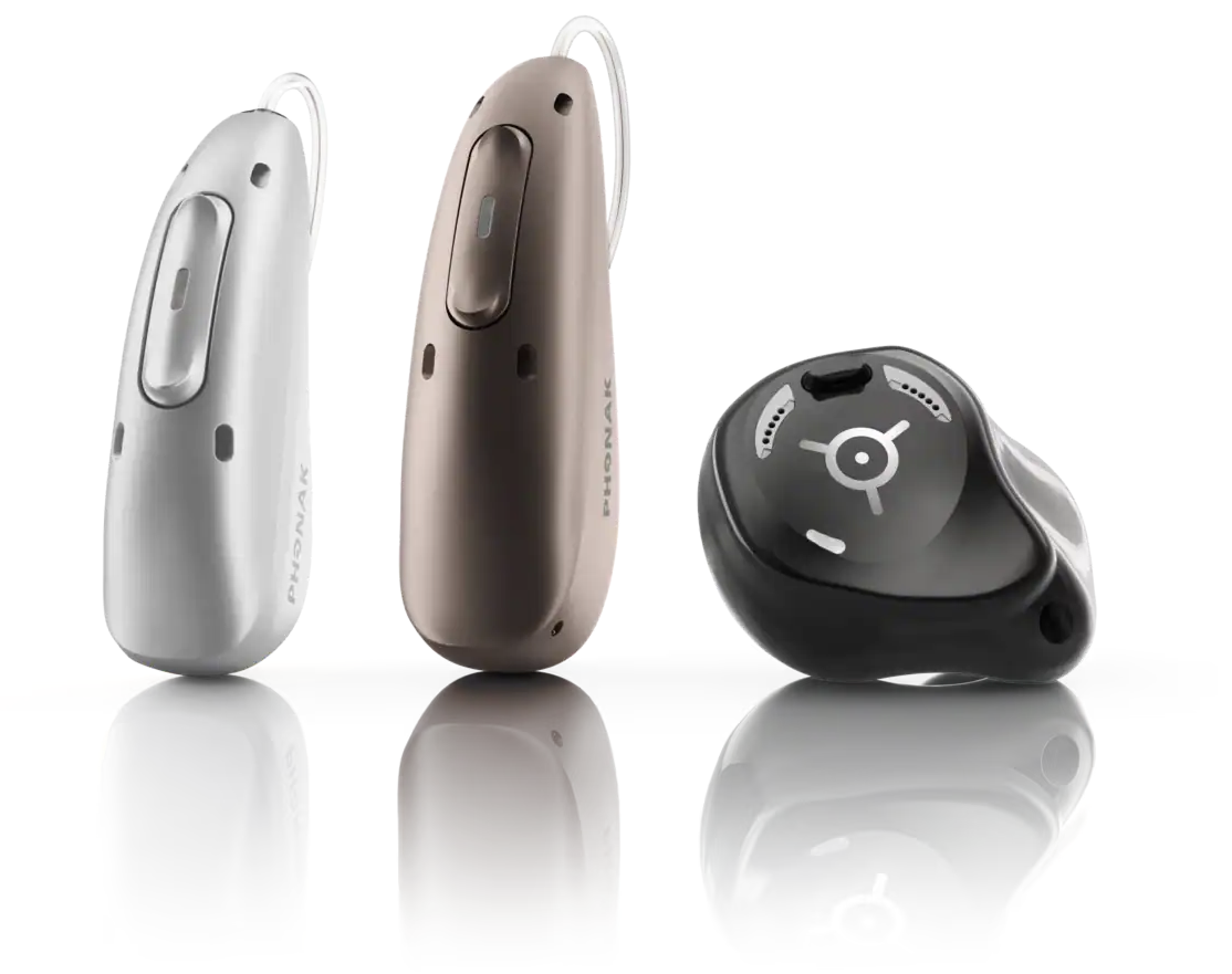
Auracast is a new broadcast audio technology that can let compatible hearing aids receive sound directly from TVs, theaters, airports, and lecture halls. Here is what it actually does, what it needs to work, and whether it should change your buying decision.
The short answer: Auracast is a broadcast feature of Bluetooth LE Audio that lets a venue, a TV, or a public address system transmit sound that nearby compatible devices can tune into, the way you join a Wi-Fi network. For hearing aid users, that can mean hearing the announcement, the stage, or the gate change directly in your ears, clearly, without a neck loop or special receiver. The catch: your hearing aids, your phone, and the venue all need to support it.
Bluetooth Classic vs. LE Audio
Classic Bluetooth was built for one-to-one connections: your phone to your headphones. It works, but it drains batteries and only pairs with one source at a time. Bluetooth LE (Low Energy) Audio is the newer standard: better sound quality, lower battery drain, and, crucially, support for broadcast audio. Auracast is that broadcast feature. One transmitter, unlimited listeners, no pairing handshake.
What this means in New York
NYC is arguably the best city in America for this technology, because so much of life here happens in acoustically hostile public spaces. The likely early adopters are the same venues that installed hearing loops: Broadway theaters, museums, houses of worship, lecture halls, airports, and transit hubs. If you have read our guide to hearing better at Broadway shows, think of Auracast as the next generation of the assistive listening systems described there. In our clinic, the patients most excited about this are theatergoers, commuters, and anyone who has ever missed a gate announcement at JFK or LaGuardia.
What you need for it to work
- Auracast-capable hearing aids: only newer models carry LE Audio hardware; some activate it via firmware updates.
- A compatible phone or assistant device: typically used to find and join broadcasts.
- A venue that broadcasts: adoption is growing but uneven; ask venues about assistive listening.
- Verified settings: streaming clarity still depends on a properly fitted device; see Real Ear Measurement.
Buy for your hearing today. Choose Auracast-ready so tomorrow comes free.
Should you wait to buy?
Usually no. Untreated hearing loss has a daily cost in conversations, work, and energy, and the transition to Auracast will take years of venue-by-venue rollout. The practical strategy we recommend: if you are choosing new hearing aids now, prefer a model with LE Audio hardware and, ideally, a telecoil as well, since NYC’s existing hearing loops are not going anywhere soon. We verify model-specific capabilities before you commit, because marketing pages and spec sheets do not always agree. Curious how this fits the broader 2026 picture? Read our guide to AI hearing aids.
Frequently asked questions
Do all hearing aids have Auracast?
No. It requires LE Audio hardware found in newer models, and sometimes a firmware update. We confirm compatibility for your exact model at a fitting or consultation.
Will Auracast replace telecoils?
Over time it may in many venues, but loops remain widely installed. Devices supporting both offer the most flexibility today.
Does Auracast cost anything to use?
No subscription is involved; it is a capability of the hardware and the venue’s broadcast system.
Where you will actually use it
Auracast is easiest to understand by picturing where it helps. Imagine a gate announcement at the airport sent straight into your hearing aids instead of echoing off the walls, a gym TV you can finally hear, a theater or house of worship that broadcasts its sound to every compatible device in the room, or a friend sharing their phone audio with you. Instead of one transmitter paired to one device, Auracast broadcasts to unlimited listeners at once, and you choose a stream much like picking a Wi-Fi network.
How to get ready for it
Auracast runs on the newer Bluetooth LE Audio standard, so it needs compatible hearing aids and compatible venues, both of which are still rolling out. The practical advice today: if you are buying new hearing aids and want to be future-ready, ask specifically whether the model supports LE Audio and Auracast, since not all current devices do. Public venues will add broadcasts gradually over the next few years.
Should it change your decision now?
For most buyers, Auracast is a reason to lean toward a future-ready device, not a reason to wait. Hearing well today matters more than a feature that venues are still adopting. We will tell you honestly which of the aids we carry support it and whether it is worth prioritizing for how you actually live. See our hearing aids page for current options.
References
- Auracast Broadcast Audio: Bluetooth SIG
- LE Audio: Bluetooth SIG
- Technology and Assistive Listening Resources: Hearing Loss Association of America (HLAA)
- Assistive Devices for People with Hearing or Voice Disorders: NIDCD, NIH
About the reviewer: Dr. Eric G. Nelson, Au.D., CCC-A, is a board certified Doctor of Audiology, founder and clinical director of Pinnacle Audiology, and a former audiology supervisor at Weill Cornell Medicine. This article is educational and is not a substitute for individual medical advice.
Get expert
hearing care.
Comprehensive evaluation, honest guidance, and long-term support, from New York's leading independent audiology practice.