EarLens light-driven hearing in NYC
EarLens works unlike any conventional hearing aid. A custom lens rests directly on the eardrum and is driven by light, not by a speaker pushing sound through the ear canal. The result is a broader, more natural range of sound with less feedback. Because the lens sits on the eardrum, it is placed by an ENT physician, Saul Modlin, MD, and then programmed and verified by our doctoral audiologists. Dr. Modlin places the lens at our Garden City office, and our doctoral audiologists handle programming and follow-up at both our Garden City and Herald Square offices.
A hearing solution that drives the eardrum with light
Conventional hearing aids amplify sound and play it into your ear canal through a small speaker. EarLens takes a different path: a custom lens placed on the eardrum is vibrated directly by light, so your own eardrum becomes the driver. That direct contact is what lets EarLens reproduce a wider band of frequencies with less of the feedback and plugged-up feeling many people dislike.
Contact, not air
A custom lens sits on the eardrum and is driven by light from an ear-tip, instead of sound from a speaker in the canal.
Broader, clearer sound
Driving the eardrum directly can deliver a wider frequency range, including lows and highs that are hard to amplify acoustically.
ENT and audiology together
An ENT physician places the lens; our doctoral audiologists run the evaluation, programming and verification. One coordinated team.
Non-surgical, removable
The lens is placed on the surface of the eardrum in the office. There is no implant and no operation.
Mild to moderately severe loss
Often a strong fit for people who want more natural sound or who dislike the occlusion and feedback of standard aids.
Candidacy is confirmed
A combined ENT and audiology consult, including an eardrum and ear-canal exam, decides whether EarLens is right for you.
One option among many
We recommend EarLens only when it genuinely fits your ears and goals, alongside the conventional brands we carry.
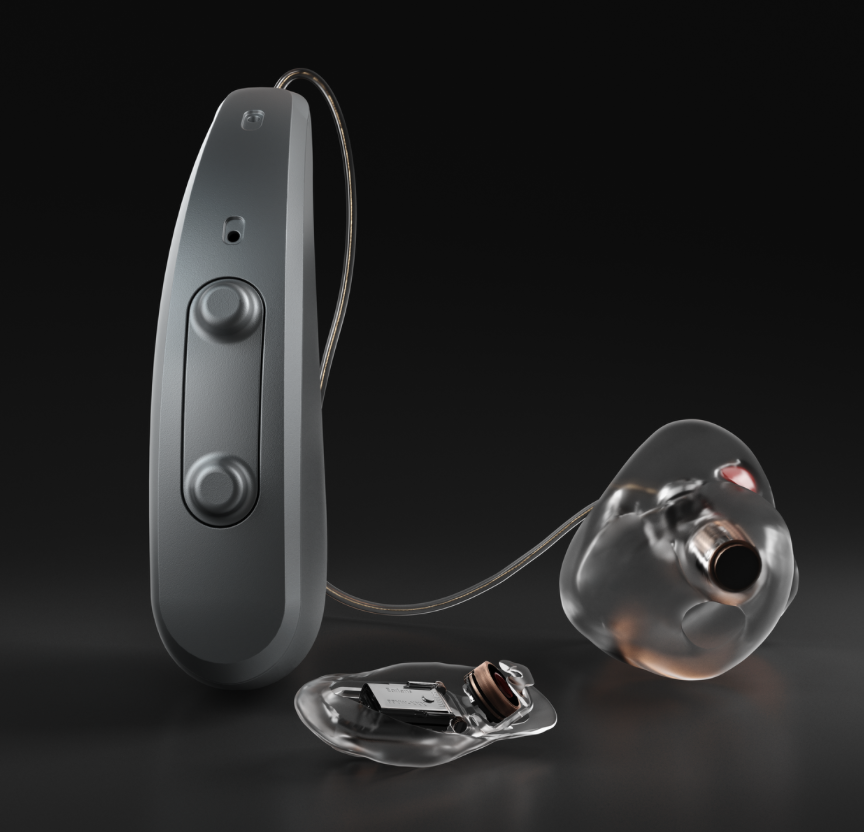
The lens sits directly on the eardrum
The custom lens, shown in blue, rests on the eardrum, with the light tip in the ear canal. Light vibrates the lens, and the lens drives the eardrum directly. No speaker in the canal and no air-conduction path, which is what gives EarLens its broad, natural sound.
From consultation to better hearing
EarLens is fit in clear, coordinated steps between Dr. Modlin and your audiologist.
Combined consult
A hearing evaluation with your audiologist and an ear exam with Saul Modlin, MD, confirm candidacy and check the health of your eardrum and canal.
Custom impressions
We take detailed measurements and impressions so the lens and ear-tip are made to the exact shape of your ear.
Lens placement
Dr. Modlin places the custom lens onto the surface of the eardrum at his Garden City office. It is precise, non-surgical, and removable.
Programming and follow-up
Your audiologist programs and verifies the processor to your hearing, then sees you for fine-tuning and ongoing care at either office.
See EarLens in action
A short look at how light-driven contact hearing works and what makes it different from a conventional hearing aid.
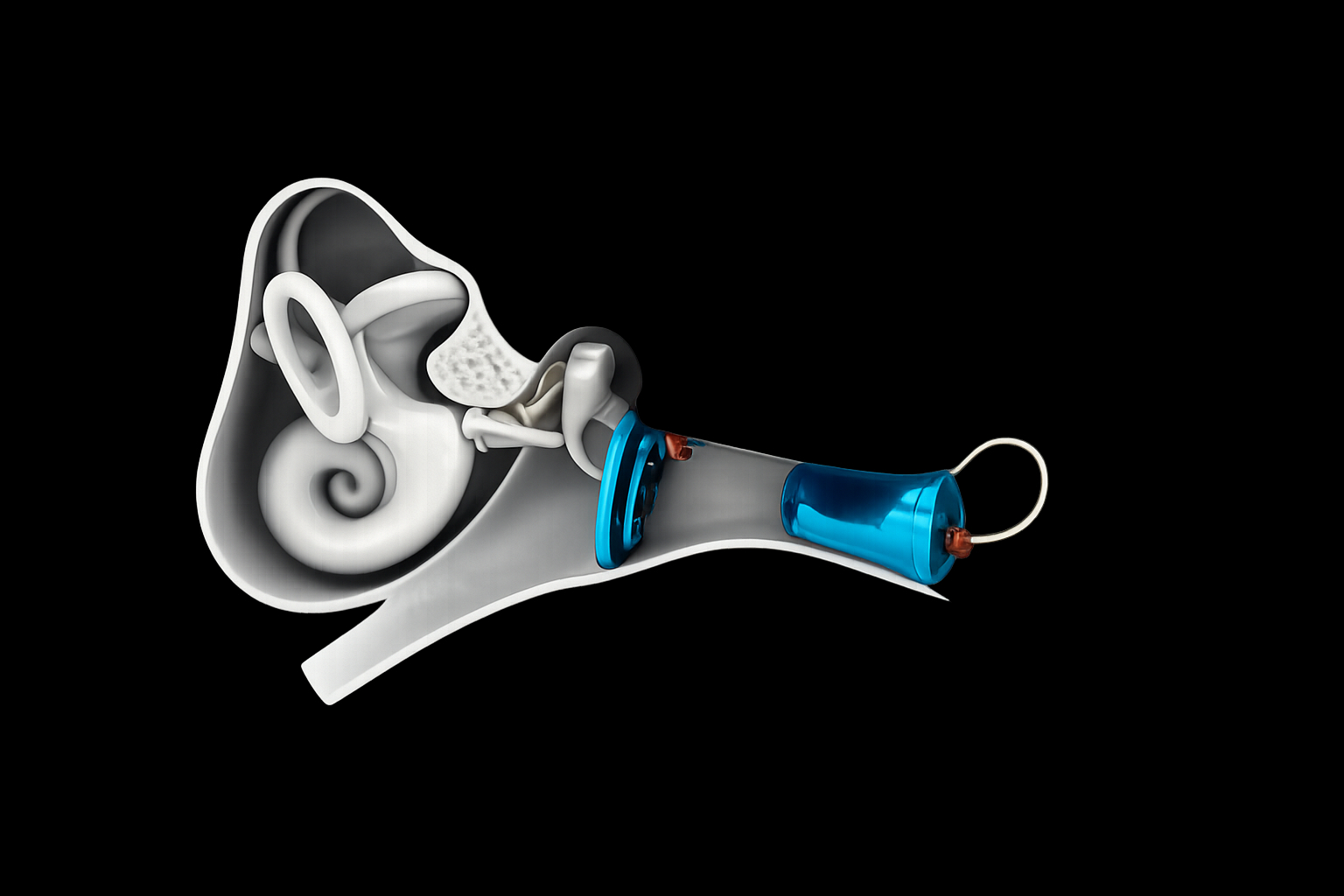
The parts of an EarLens system
EarLens pairs a custom lens on the eardrum with a light-emitting ear-tip and a discreet behind-the-ear processor.
Made to rest on the eardrum
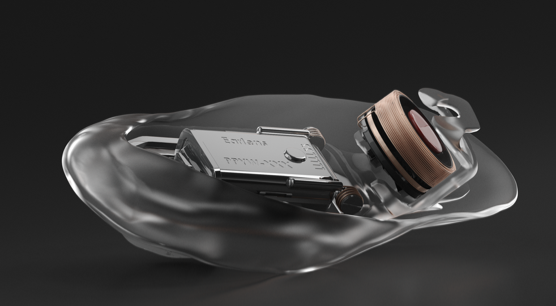
The custom lens and light tip are precision-made for your ear. Light from the tip vibrates the lens, and the lens drives your eardrum directly, the step that gives EarLens its broad, natural sound.
The Lens
A tiny, custom-made lens that sits on the surface of the eardrum and vibrates it directly when struck by light.
The Light Tip
A custom ear-tip that converts processed sound into light and shines it onto the lens, with no speaker in the canal.
The Processor
A discreet behind-the-ear unit that picks up sound, processes it, and sends it to the light tip, like a conventional device.
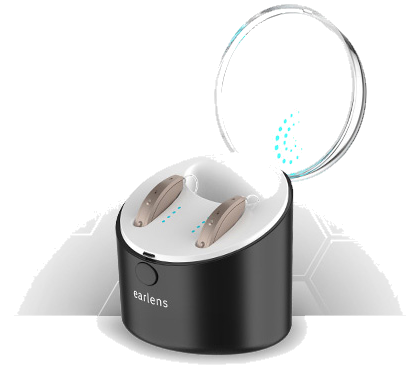
Charge it overnight
Rechargeable processors dock in the EarLens charger and are ready each morning. We set you up with a simple daily routine and check everything at each visit.
A wider range of sound
Because the eardrum is driven directly, EarLens can reproduce frequencies that are difficult to deliver through a canal speaker, which is why many wearers describe the sound as fuller and more natural.
Fuller, warmer bass
Direct contact delivers low pitches that often sound thin through a conventional speaker.
Crisp detail
Extended high-frequency output supports clarity for speech sounds and music.
Less whistling
Driving the eardrum directly reduces the feedback that limits gain in standard hearing aids.
Less plugged-up feeling
An open approach can reduce the boomy, blocked sensation of your own voice.
Built for richness
The broader band makes EarLens appealing to people who care about how music sounds.
Measured on you
Your audiologist verifies real, personalized output, not just factory settings.
Placed by Saul Modlin, MD
EarLens is a medical-grade solution that sits on the eardrum, so a physician handles placement. We partner with a board-certified ENT based in Garden City.

Saul M. Modlin, MD, FACS, FAAP
Dr. Modlin is a board-certified otolaryngologist with more than 20 years of experience. He earned his medical degree with honors from the University of Maryland School of Medicine and completed his otolaryngology residency at Montefiore Medical Center / Albert Einstein College of Medicine, where he served as chief resident, followed by a fellowship in pediatric otolaryngology at Northwestern. He is a Fellow of the American College of Surgeons and the American Academy of Pediatrics and holds teaching appointments at Stony Brook School of Medicine.
Dr. Modlin sees patients only at his Garden City office, so the EarLens ear examination and the in-office, non-surgical lens placement take place there. Our doctoral audiologists handle the hearing evaluation, programming and verification, at either office.
Fit at Herald Square and Garden City
The EarLens lens is placed by Dr. Modlin at our Garden City office, where his ENT practice shares the same building. Audiology evaluation, programming and follow-up are available at both our Garden City and Herald Square offices.
Herald Square
421 7th Avenue, Suite 310, Floor 3, New York, NY 10001. Patient entrance: 159 W 33rd Street, Floor 3, steps from Herald Square and Penn Station. Audiology evaluation, programming and follow-up (no ENT placement here).
Garden City
300 Garden City Plaza, Suite 248, Garden City, NY 11530. Dr. Modlin sees patients here for the ENT lens placement, alongside full audiology care, all in one building.
Is EarLens right for you?
EarLens is not for everyone. A combined ENT and audiology consultation is the only way to know, but these guidelines help.
You may be a candidate if
- You have mild to moderately severe sensorineural hearing loss
- You want broader, more natural sound, especially for music
- You dislike feedback or the plugged-up feeling of standard aids
- Your eardrum and ear canal are healthy on exam
EarLens may not fit if
- You have certain middle-ear or eardrum conditions
- Your loss is in a range better served by another solution
- You prefer a fully self-managed, no-physician device
- An exam finds the ear is not a good candidate at this time
EarLens questions, answered
EarLens is a light-driven contact hearing solution. Instead of pushing amplified sound through the air in your ear canal, a tiny custom lens rests directly on the eardrum and is vibrated by light from an ear-tip, so the eardrum is driven directly. This can deliver a wider range of sound than a conventional hearing aid.
Because the lens sits on the eardrum, a physician places and removes it. We work with Saul Modlin, MD, a board-certified ear, nose and throat physician, who handles the medical side, while our doctoral audiologists handle the hearing evaluation, sound processing and verification.
The ENT lens placement is done by Dr. Modlin at our Garden City office, since that is where he sees patients. Audiology evaluation, programming and follow-up are available at both our Garden City and Herald Square, Manhattan offices.
No. There is no surgery and no implant. The lens is placed on the surface of the eardrum during an in-office visit by the ENT physician, and it can be removed. The processor worn behind the ear is non-surgical, like a conventional device.
EarLens is generally for adults with mild to moderately severe sensorineural hearing loss who want broader, more natural sound, or who have struggled with the occlusion and feedback of conventional hearing aids. Candidacy is confirmed at a combined ENT and audiology consultation.
A conventional hearing aid plays amplified sound into the ear canal through a speaker. EarLens uses light to vibrate the eardrum directly through a contact lens, which reduces feedback and can reproduce a broader band of frequencies, including low and high pitches that are hard to deliver acoustically.
See whether EarLens is right for you
Book a combined ENT and audiology consultation at Herald Square or Garden City, and we will walk you through candidacy, the lens, and what to expect.
Related reading: Compare Hearing Aid Brands
Imagery and product information are sourced from EarLens manufacturer materials and used for identification only. For details, visit EarLens.com.