AI Hearing Technology:
The Next Generation of Hearing Aids in NYC
Machine learning, deep neural networks, and motion sensors are transforming how modern hearing aids understand your world and adapt in real time. Here is what the technology actually does, what it cannot do, and how to choose well in NYC.
The phrase "AI hearing aids" has become one of the most prominent, and most abused, marketing terms in hearing healthcare. Every manufacturer now claims to use artificial intelligence in their devices. Some of this is genuine, reflecting meaningful advances in machine learning and neural network processing inside modern hearing aids. Some of it is marketing applied to algorithms that have existed for years. For consumers navigating this landscape in NYC, understanding what AI actually means in a hearing aid, and what it can and cannot do, is essential.
What AI Actually Does Inside a Modern Hearing Aid
The most meaningful AI-driven feature in current hearing aids is environmental classification and adaptive processing. A premium hearing aid analyzes the acoustic environment hundreds of times per second, identifying the dominant sound source (speech, music, noise, wind), the signal-to-noise ratio, the number of active talkers, and the spatial layout of sound. Based on this continuous classification, the device adjusts compression, directionality, noise management, and feedback suppression in real time.
The use of deep neural networks is one important development. These systems are trained on sound examples to help distinguish speech from noise, then use that trained model inside the hearing aid. A 2021 review in Seminars in Hearing describes research on noise reduction, speech understanding, and listening effort. Its authors were affiliated with Oticon, so it should be read as manufacturer-authored research, not an independent comparison of today's devices.
Current platforms take different approaches. Phonak Audéo EON Sphere uses Spheric Speech Clarity 3.0 to separate speech from background noise. Oticon Reveal pairs Speech AI with Context AI to balance speech and surrounding sounds. Signia Pure C&G MaX combines AI features for conversations, your own voice, ambient sound, and noise control. These are manufacturer-described features, not a guarantee that one model will work best for every listener.
Health Monitoring and Sensor Integration
Some hearing aids also offer wellness features. For example, Starkey describes activity tracking, respiratory-rate monitoring, and balance exercises through its Omega AI and My Starkey app. Features vary by device, style, app, and phone compatibility, so check the specific model rather than assuming every AI hearing aid includes them. They are separate considerations from how well you hear.
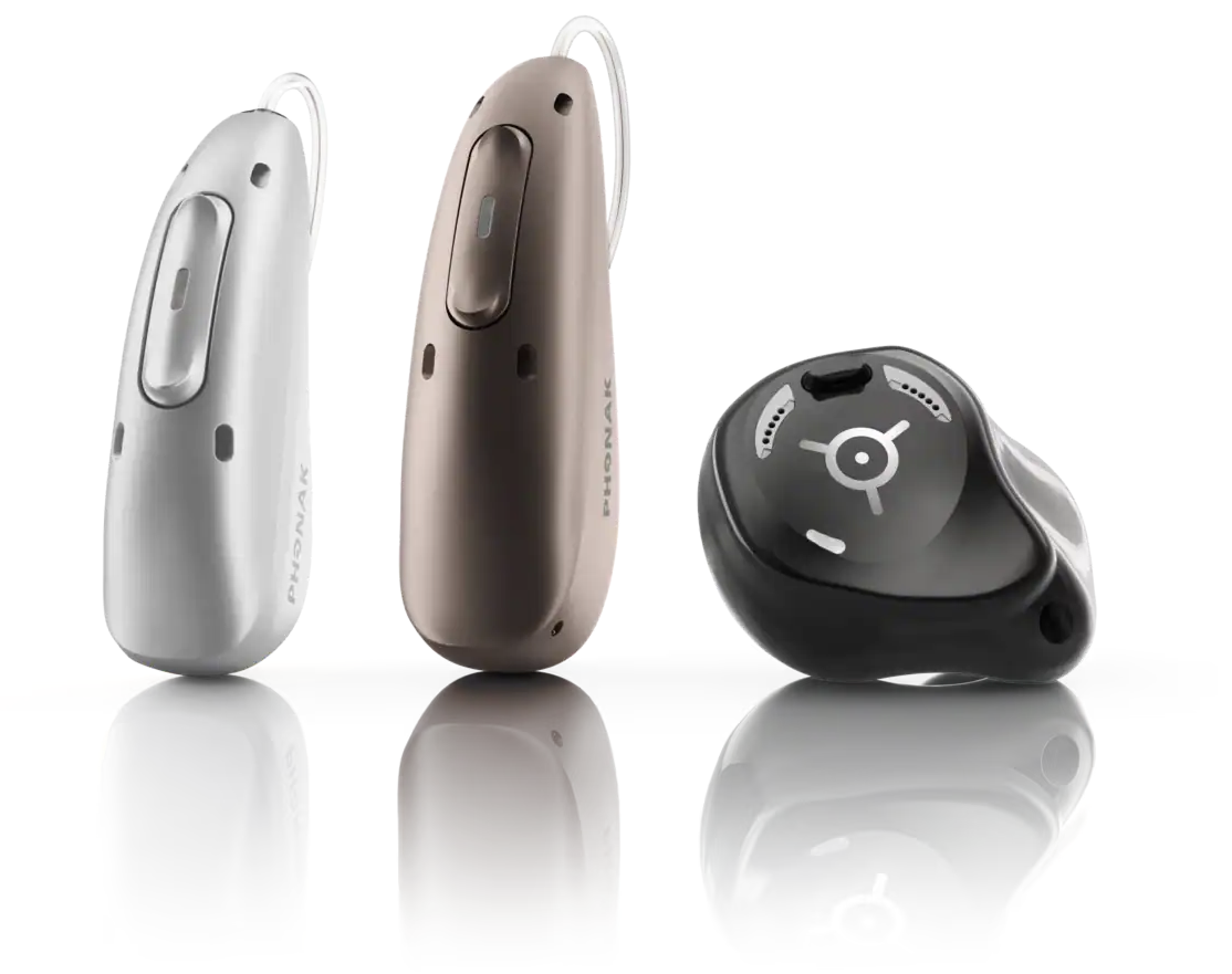
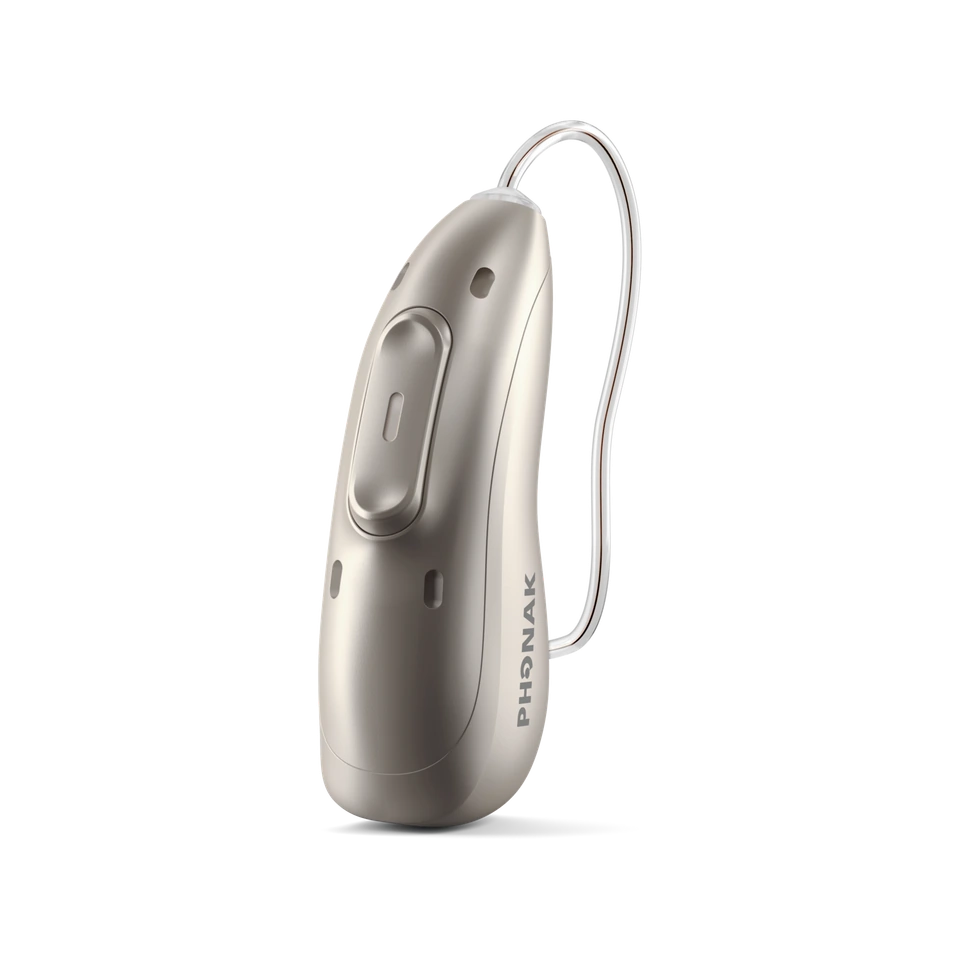
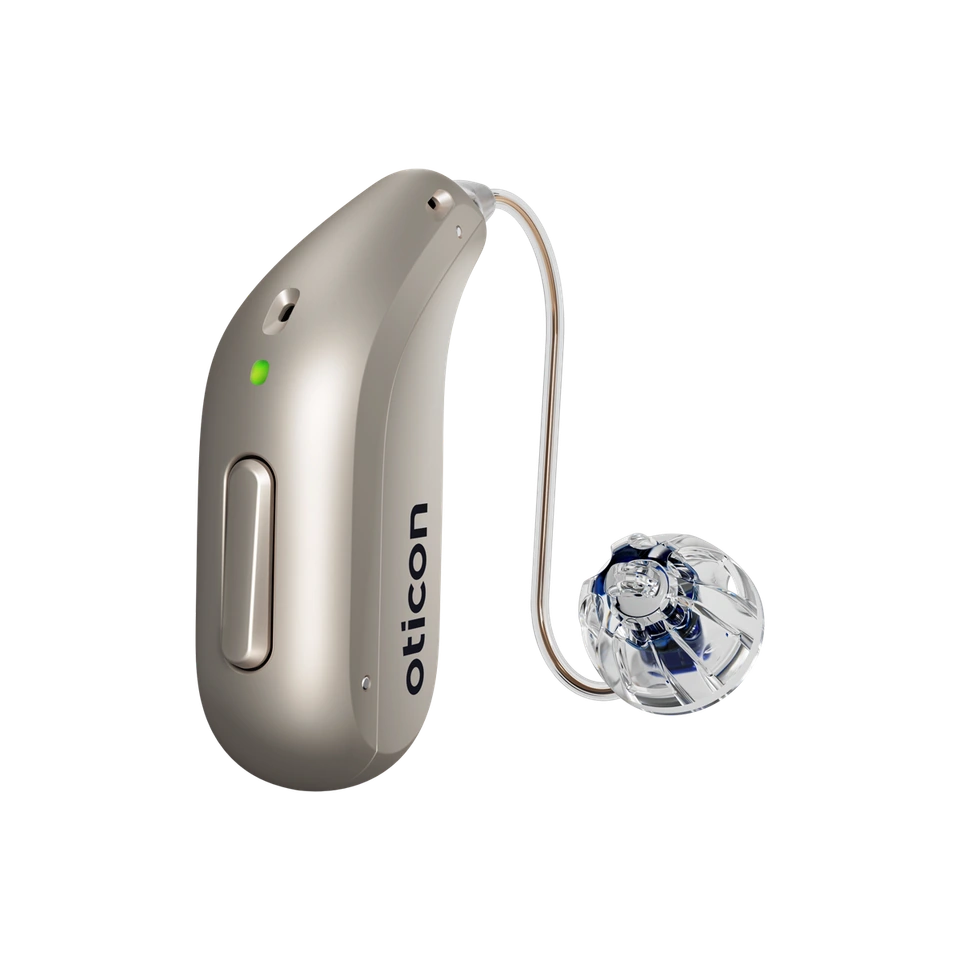
Hearing aids, up close
Official manufacturer images of prescription hearing-aid examples. These photographs identify the models shown, not a recommendation for your hearing or a guarantee of availability.
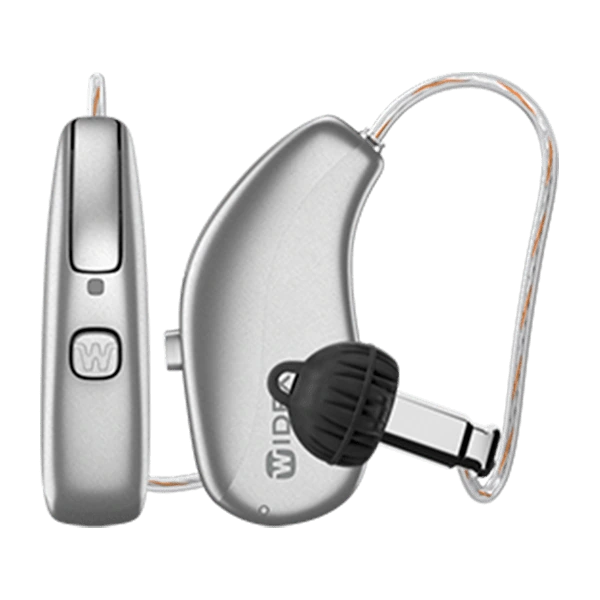
Streaming, Connectivity, and Hands-Free Operation
The integration of Bluetooth streaming, direct audio from iPhone, Android, and computer audio, has transformed the hearing aid experience in ways that deserve mention alongside AI features. Current premium hearing aids support hands-free phone calls, high-quality music streaming, direct connections to televisions via accessory streamers, and integration with smart home systems.
What AI Cannot Do
The underlying challenge of hearing in noise is not entirely a processing problem, it is a biological one. AI can improve the signal-to-noise ratio delivered to the ear, but it cannot restore the neural discrimination of speech-in-noise that cochlear damage impairs. Patients who expect AI to fully solve difficult listening situations will be disappointed. The realistic benefit is meaningful improvement in most environments, with residual difficulty in the hardest ones.
It is also worth being clear-eyed about marketing. "AI" on a spec sheet does not guarantee better hearing for you specifically. The features that matter, deep-learning noise reduction, well-tuned directionality, reliable connectivity, are only as good as how the device is programmed to your ears. A flagship device is not a substitute for a careful fitting and follow-up.
For a source-by-source explanation of what testing and verification can support, see Pinnacle's clinical evidence guide. It separates measurable benefit from manufacturer positioning and makes the limitations explicit.
The Fitting Still Matters Most
Premium AI features do not remove the need for real-ear measurement verification, programming to your audiogram, and structured follow-up. The technology inside the hearing aid is what the manufacturer contributes; the fitting quality is what the audiologist contributes. Both matter, but the fitting is what you can actually control.
At Pinnacle Audiology, we carry all of the major AI-enabled platforms and fit them using the evidence-based standards that make the technology work: comprehensive audiological evaluation, real-ear verification, and structured follow-up care. For current Phonak options, see our Audéo EON Sphere guide. Our earlier Phonak Sphere Infinio review covers that previous generation.
AI Hearing Aids: Common Questions
Are AI hearing aids worth it?
They can be worth considering if speech in noise is a frequent problem, but benefit varies by hearing loss, listening needs, device, and fitting. Programming and verification with real-ear measurement help check that the device is providing the prescribed amplification.
Link to this answerWhich hearing aids have the best AI?
No single hearing aid has the best AI for every listener. Current options include Phonak Audéo EON Sphere, Oticon Reveal, and Signia Pure C&G MaX, which take different approaches to speech and noise. We compare options across major brands based on your hearing, dexterity, phone, and listening needs.
Link to this answerDo AI hearing aids help in noisy restaurants?
AI processing can help make speech easier to follow in noise, but it does not restore normal hearing or remove every competing sound. Benefit varies with your hearing loss, the fitting, and the room. Follow-up adjustments and, in some situations, a remote microphone can help address remaining difficulty.
Link to this answerWhere can I try AI hearing aids in NYC?
Pinnacle Audiology fits AI-enabled hearing aids at our Midtown Manhattan and Garden City offices. At-home visits are available in Manhattan, Brooklyn, Queens, and Nassau County; a concierge visit fee applies to every appointment.
Link to this answerReferences
- Andersen, A.H., Santurette, S., Pedersen, M.S., et al. (2021). "Creating clarity in noisy environments by using deep learning in hearing aids." Seminars in Hearing. 42(3):260–281.
- Balling, L.W., Mølgaard, L.L., Townend, O., & Switalski, W. (2021). "The collaboration between hearing aid users and artificial intelligence to optimize sound." Seminars in Hearing. 42(3):282–294.
- Fabry, D.A., & Bhowmik, A.K. (2021). "Improving speech understanding and monitoring health with hearing aids using artificial intelligence and embedded sensors." Seminars in Hearing. 42(3):295–308.
- Lin, F.R., Pike, J.R., Albert, M.S., et al. (2023). "Hearing intervention versus health education control to reduce cognitive decline (ACHIEVE): a randomised controlled trial." The Lancet. 402(10404):786–797.
Manufacturer Product Sources
- Phonak: Audéo EON Sphere features
- Oticon: Reveal and Dual AI
- Signia: Pure Charge&Go MaX features
- Starkey: Omega AI and My Starkey features
Clinical Sources
Get expert
hearing care.
Comprehensive evaluation, honest guidance, and long-term support, from New York's leading independent audiology practice.