
Coming Soon Auditory processing evaluations are launching at our Herald Square office in Midtown Manhattan, offered by all three of our doctoral audiologists. Now accepting inquiries for children, teens, and adults.
Service · Auditory Processing

Auditory Processing Evaluations for Children and Adults.

When hearing appears normal but listening remains difficult, the problem may involve how the brain organizes and interprets sound. Pinnacle Audiology provides detailed auditory processing evaluations for school-aged children, teenagers, and adults in New York City, generally beginning around age 7.

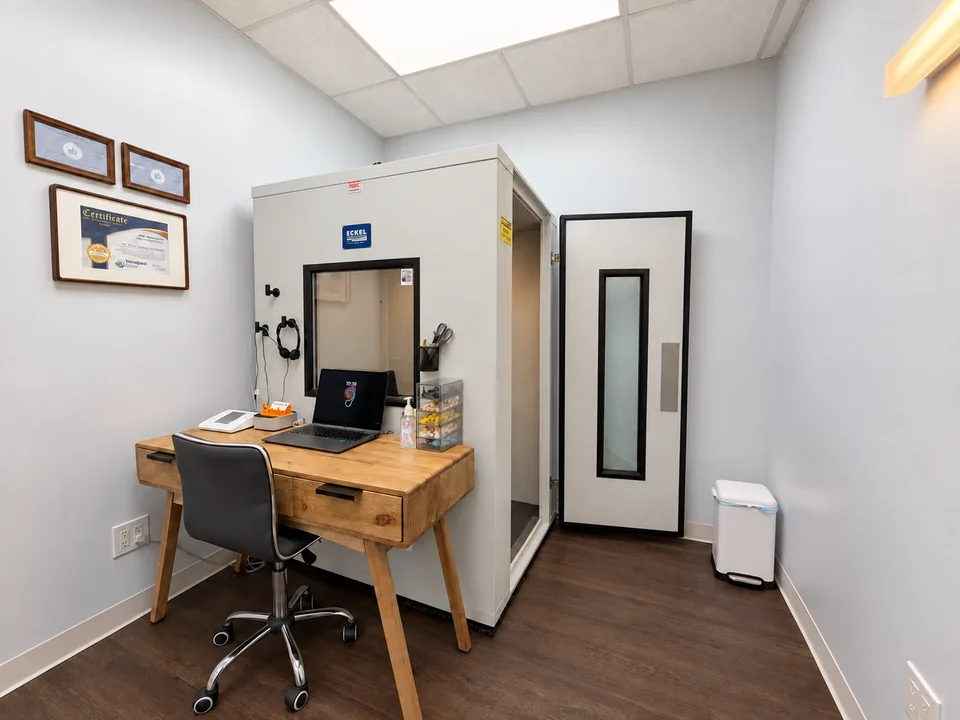
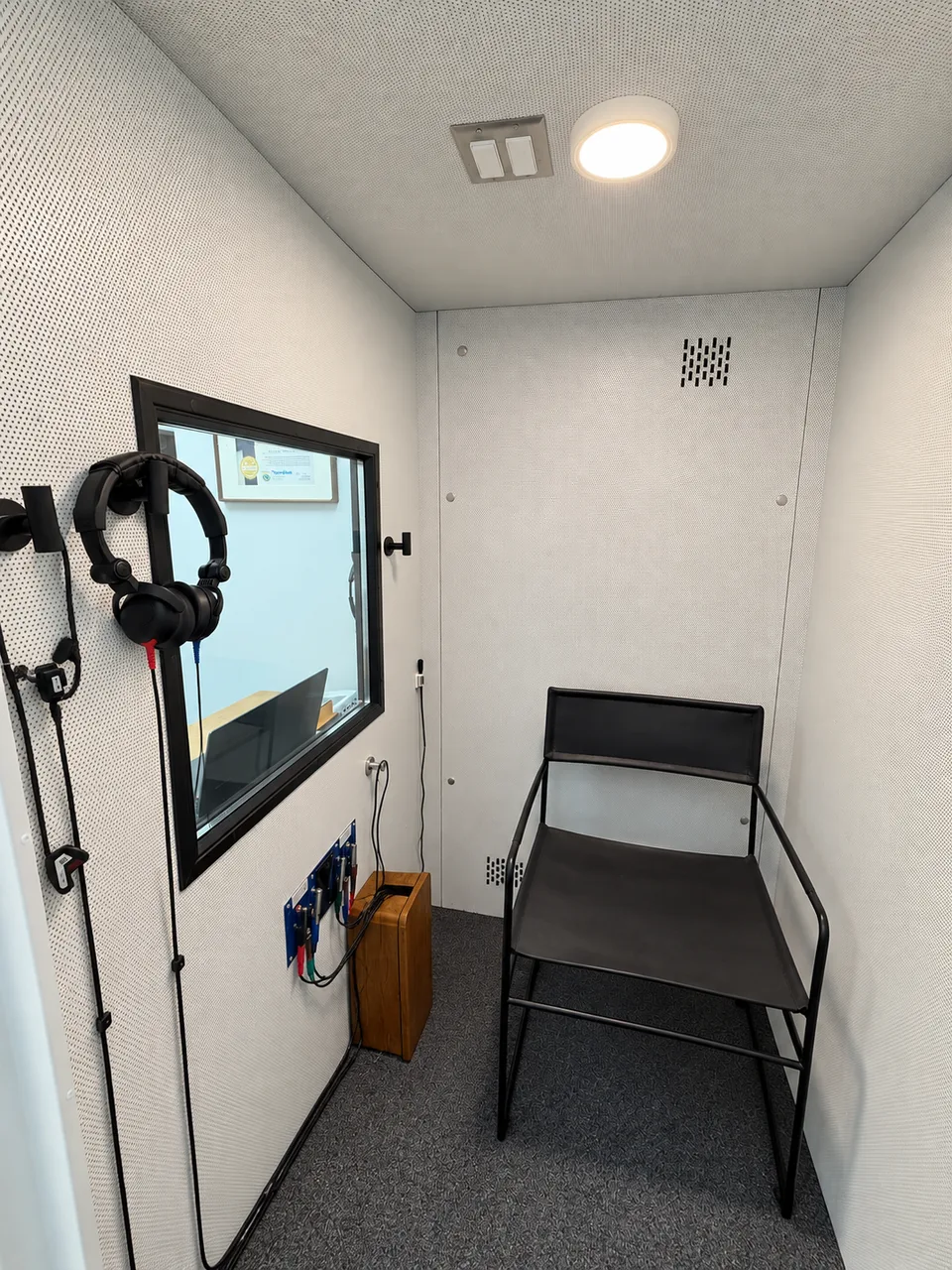
A calm, one-on-one listening evaluation at the Pinnacle Audiology office in Midtown Manhattan
Auditory Processing Evaluation

Children 7+, teens & adults · NYC & Long Island

  • An individualized battery, never a fixed checklist
  • Always begins with a complete hearing evaluation
  • Selected and interpreted by a doctor of audiology

Offered by all three of our doctoral audiologists, led by clinical director Dr. Eric G. Nelson, Au.D., CCC-A, a former audiology supervisor at Weill Cornell Medicine.

The core idea

Hearing sound is not the same as understanding it.

A standard hearing test measures whether a person can detect sound. Auditory processing testing looks at something different: how effectively the central auditory system organizes and interprets it. Someone can have completely normal pure-tone hearing and still find listening genuinely hard.

Normal test, real difficulty

Normal pure-tone hearing does not rule out trouble understanding speech in noise, following spoken directions, telling similar-sounding words apart, or keeping up with rapid verbal information.

Why we start with the ears

Auditory processing difficulty can coexist with peripheral hearing loss, so every evaluation begins with a complete assessment of the ears and hearing system.

Who may benefit

When listening is harder than it should be.

These are the patterns families, teachers, and adults describe most often. They appear across school-aged children, teenagers, college students, and working adults.

School-aged children

In the classroom

  • Says “what?” often, even though hearing tests look normal
  • Struggles to understand the teacher from across the room
  • Loses the thread when classmates, ventilation, or hallway noise compete
  • Misses parts of multi-step spoken directions
  • Needs noticeably more repetition than peers
  • Confuses similar-sounding words
  • Seems distracted specifically during spoken instruction
  • Does better when information is written or shown visually
Teens & college students

As demands grow

  • Finds it hard to take notes while listening
  • Cannot keep up with fast speech or dense lectures
  • Is worn out by listening after a full day of classes
  • Struggles to follow group discussions and seminars
  • Has trouble understanding unfamiliar speakers or accents
  • Reports reading, spelling, or phonological-awareness concerns
Adults & professionals

At work and at home

  • Feels drained after meetings or calls in noisy settings
  • Finds it hard to tell where a voice or sound is coming from
  • Cannot easily separate one speaker from many
  • Asks for repetition despite a clear hearing test
  • Prefers written follow-up to verbal instructions
An important caution

These signs are not specific to auditory processing disorder. Similar concerns can relate to hearing loss, fluctuating middle-ear problems, ADHD, language disorders, learning differences, autism, anxiety, sleep difficulties, or other factors. That is exactly why a careful, individualized evaluation matters more than any checklist.

Age & readiness

Ready to be tested, not just old enough.

Pinnacle Audiology generally performs comprehensive behavioral auditory processing evaluations beginning around age 7. Age is a guide, not a switch.

Generally age 7 and older

Why readiness matters

Behavioral auditory processing tests ask a child to listen carefully, follow specific instructions, and respond consistently over a long appointment. A child who is not yet ready can produce results that reflect attention or fatigue rather than auditory processing. Age alone does not determine readiness: some seven-year-olds benefit from a staged evaluation, and some older children need modifications too. Younger children may be better served first by monitoring, hearing testing, educational support, or other professional evaluations, with a definitive auditory processing evaluation reserved for when they are developmentally ready.

A child is usually ready when they can

  • Understand the task instructions
  • Give consistent behavioral responses
  • Wear headphones for an extended appointment
  • Repeat words, numbers, or sentences on request
  • Sustain enough attention for valid testing
  • Use English well enough for English-based test materials
Before testing

What happens before auditory processing testing.

A meaningful evaluation is built on careful groundwork. A hearing evaluation comes first because hearing loss and middle-ear dysfunction can change auditory processing test results.

  1. Detailed history

    Developmental, medical, educational, and listening history, in the patient’s own words and the family’s.

  2. Review of concerns

    What parents, teachers, the patient, or the school are noticing, and where listening breaks down.

  3. Comprehensive hearing evaluation

    A complete peripheral hearing test, because hearing status shapes how every later result is read.

  4. Otoscopy & middle-ear assessment

    A look at the ear canal and eardrum and a check of middle-ear function.

  5. Speech testing

    How clearly speech is understood, in quiet and in more demanding conditions.

  6. Review of outside evaluations

    Relevant reports from speech-language pathology, psychology, neuropsychology, occupational therapy, education, or medicine.

  7. An individualized battery

    Selection of auditory processing tests chosen for this patient’s age, symptoms, language, and attention.

  8. Pattern interpretation

    Reading the pattern across tests, not leaning on any single score.

  9. Written recommendations

    Clear, individualized recommendations for home, school, college, or work.

The test battery

How we examine different listening skills.

The measures below are among the most useful in auditory processing assessment. The exact battery is always individualized: not every patient receives every test, and results are interpreted together, never in isolation.

01
Generally age 7 and older

QuickSIN · Quick Speech-in-Noise Test

What the patient does

The patient listens to recorded sentences presented with competing four-talker babble. Each sentence contains five key words, and the background noise grows more challenging as the signal-to-noise ratio decreases. The listener repeats back as much of each sentence as possible.

How it works

  • Six sentences per standard list
  • Five scored key words in each sentence
  • Speech presented with four-talker babble
  • Signal-to-noise ratio drops in 5 dB steps
  • Yields a signal-to-noise ratio loss, or SNR loss
  • Run through headphones or in a calibrated sound field, depending on the clinical purpose

What it evaluates

  • Functional speech understanding in background noise
  • How much acoustic advantage a listener needs versus an average normal-hearing adult reference
  • Difficulty separating a target speaker from competing voices
  • Real-world limits that may not appear during speech testing in quiet

Why it matters at school

It connects to understanding a teacher while classmates talk, following group activities, and hearing in cafeterias, gyms, auditoriums, and assemblies, especially from the back or side of a room. Poor speech-in-noise performance can happen for several reasons and is not, by itself, proof of CAPD.

Clinical note: QuickSIN is clinically useful, but its traditional norms are strongest in adults. Performance changes throughout childhood, so pediatric scores are interpreted using age, language, developmental level, and the whole battery, rather than applying an adult cutoff automatically. There is no single definitive pediatric diagnostic cutoff that begins at age 7.
02
SCAN-3:C ages 5–12; SCAN-3:A ages 13+

SCAN-3 · Co-normed Auditory Processing Battery

What it is

SCAN-3 is a standardized, co-normed battery designed to identify patterns of auditory processing difficulty. SCAN-3:C is normed for children ages 5 years through 12 years, 11 months; SCAN-3:A covers adolescents and adults from age 13, within the instrument’s published range. Although SCAN-3:C is normed from age 5, Pinnacle Audiology generally reserves comprehensive diagnostic testing for children who are developmentally ready, commonly around age 7 or older.

Principal SCAN-3:C subtests

  • Gap Detection: hearing pairs of tones and judging one sound or two, testing temporal resolution
  • Auditory Figure-Ground: repeating words in competing noise, testing recognition and auditory closure
  • Competing Words: different words to each ear at once, testing dichotic listening and binaural integration and separation
  • Competing Sentences: different sentences to each ear, testing binaural separation and selective attention
  • Filtered Words: identifying acoustically reduced words, testing auditory closure
  • Time-Compressed Sentences: repeating electronically accelerated speech, testing processing of rapid, degraded speech

What it evaluates

  • Temporal resolution and auditory closure
  • Dichotic listening, binaural integration and separation
  • Selective and divided auditory attention
  • Recognition of degraded or rapid speech

Why it matters at school

Its subtests mirror everyday classroom listening: following a teacher while others speak, shifting attention between speakers, and making sense of speech that is fast, filtered by distance or masks, or partly obscured by poor room acoustics.

Clinical note: SCAN-3 does not, on its own, establish a CAPD diagnosis. It is one source of standardized information within the complete evaluation.
03
Commonly cited age 7 and older

Dichotic Digits Test

What the patient does

Different numbers are presented to the right and left ears at the same time. In common double-digit conditions, two numbers arrive at each ear during one presentation, and the patient repeats all of the numbers heard, in any order unless specific instructions are used.

How it works

  • Different auditory information enters each ear simultaneously
  • Single-, double-, or other digit conditions, depending on the version
  • Scores are calculated separately for each ear
  • The clinician weighs overall accuracy, ear differences, and error patterns
  • Directed-listening conditions may be added for clinical purposes

What it evaluates

  • Dichotic listening and binaural integration
  • How well the two ears and cerebral hemispheres work together
  • Interhemispheric transfer of auditory information
  • Dividing attention across simultaneous inputs
  • Ear asymmetry, read in the context of age and the full battery

Why it matters at school

It relates to listening when several students speak, joining group projects, following a teacher while another conversation happens nearby, and holding on to the whole verbal message when sound competes.

Clinical note: attention influences dichotic performance. An abnormal score does not, on its own, separate an auditory disorder from an attention disorder.
04
Commonly cited age 8 and older

Frequency Pattern Test

What the patient does

The patient hears sequences of three tones. Each tone is either high or low in pitch, and the patient identifies or imitates the sequence, for example high-low-high. The commonly used Musiek Frequency Pattern version is generally cited for age 8 and older.

How it works

  • Three-tone sequences
  • Two distinguishable frequencies
  • Monaural presentation, typically testing each ear
  • Verbal labeling, humming, or both, depending on the clinical question
  • Accuracy compared across ears and response conditions

What it evaluates

  • Temporal ordering and auditory pattern recognition
  • Sequencing of acoustic information
  • Pitch discrimination within a pattern
  • Integration of right- and left-hemisphere auditory function
  • Interhemispheric transfer when a verbal label is required

Why it matters at school

Temporal pattern perception underlies rhythm, stress, and intonation: hearing whether a speaker is asking a question or making a statement, catching emotional tone and emphasis, and following the order of rapid information.

Clinical note: a poor Frequency Pattern score does not, by itself, cause or diagnose a reading disorder. It is one piece of a broader picture.
05
Feasible in many children by age 7

GIN · Gaps-In-Noise Test

What the patient does

The patient listens to segments of broadband noise that contain zero, one, or several very brief silent gaps, and responds whenever a gap is detected. Published pediatric work indicates that many typically developing children can complete the task successfully by about age 7.

How it works

  • Broadband noise segments
  • Silent gaps of different durations
  • Some trials contain no gap
  • Multiple gap opportunities within a segment
  • Threshold is based on the shortest gap detected consistently
  • A percent-correct score may also be considered, and each ear may be assessed separately

What it evaluates

  • Temporal resolution
  • Detection of extremely rapid changes in sound
  • Recognizing that one continuous sound has been interrupted
  • Processing of timing cues important to speech perception

Why it matters at school

Speech is full of rapid transitions and brief timing cues. Reduced temporal resolution may make fast or acoustically similar speech harder to tell apart, especially when a speaker is rapid or distant, or when noise competes.

Clinical note: GIN is not a test of intelligence, sustained attention, or language comprehension. Attention is needed to complete it, but the target skill is temporal resolution.
Reading the results

What the results can tell us.

The audiologist looks at whether the pattern across tests points to difficulty in one or more specific listening skills.

Speech in noiseAuditory closureDichotic listeningBinaural integrationBinaural separationTemporal resolutionTemporal sequencingRapid speech processingEar asymmetry
The most important sentence on this page

CAPD is not diagnosed from one failed test. Results must form a clinically meaningful pattern, read alongside hearing, development, language, attention, and everyday listening.

APD, ADHD & learning differences

Overlapping signs, separate conditions.

Auditory processing disorder and ADHD are distinct. Their day-to-day signs can look alike, which is why a careful differential evaluation, and often a team, matters.

Auditory processing

Difficulty is often most obvious when information is spoken, rapid, degraded, or buried in noise. The struggle tracks the listening conditions.

Where they overlap

Both can bring missed instructions, inconsistent responses, distractibility, uneven classroom performance, and listening fatigue. A child can have APD, ADHD, both, or neither.

Attention & executive function

ADHD can affect performance across visual and auditory tasks alike, not only listening. It is diagnosed by qualified medical or behavioral-health professionals.

How we work

Audiologists do not diagnose ADHD. When the picture is mixed, collaboration may involve a pediatrician, psychologist, neuropsychologist, speech-language pathologist, teacher, educational specialist, or occupational therapist, so each professional contributes what they are qualified to assess.

After the evaluation

Recommendations that fit the child.

When an evaluation points to specific difficulties, recommendations are individualized to that profile. Examples of what may follow include:

Preferential seating matched to the child’s listening profile
Reducing competing noise in the learning space
Gaining the child’s attention before speaking
Breaking spoken instructions into shorter steps
Written or visual reinforcement of key information
Repetition and rephrasing rather than simply more volume
Pre-teaching vocabulary before new material
Checking comprehension along the way
Additional processing time
Strategic note-taking support
Recorded or written access to important instruction
Remote microphone technology when clinically appropriate
Classroom acoustic modifications
Speech-language or educational intervention
Auditory training selected for the identified deficit
Follow-up assessment to measure progress
Please note

An evaluation does not guarantee that a child will qualify for an IEP, a 504 Plan, or a specific piece of classroom technology. Educational eligibility decisions are made by the school team. Our role is to provide clear, well-supported recommendations they can act on.

FAQ

Auditory processing questions.

What is auditory processing disorder?+

Auditory processing disorder, also called central auditory processing disorder or CAPD, describes difficulty with how the central auditory system organizes and interprets sound, even when the ears detect sound normally. It is identified through a careful, individualized evaluation, not a single test.

Is APD the same as hearing loss?+

No. Hearing loss is a reduced ability to detect sound. Auditory processing difficulty is about interpreting sound that is detected. The two can occur together, which is why an auditory processing evaluation always begins with a complete hearing test.

What age can a child be tested for APD?+

We generally perform comprehensive behavioral auditory processing evaluations beginning around age 7, when most children can follow the tasks and respond consistently. Readiness, not age alone, is the deciding factor. Some younger children are better served first by monitoring, hearing testing, or other evaluations, and this does not mean a younger child can never be assessed.

Why does my child hear normally but struggle in school?+

A basic hearing test measures detection. A child can detect sound well and still find it hard to understand speech in noise, follow multi-step directions, or keep up with rapid speech. An evaluation helps distinguish auditory processing, hearing, attention, language, and environmental factors.

Can APD look like ADHD?+

The everyday signs can overlap, including missed instructions, inconsistent responses, and distractibility. They are separate conditions that require careful differential evaluation. Auditory difficulty tends to track listening conditions, while ADHD can affect visual and auditory tasks alike.

Can someone have both ADHD and APD?+

Yes. A person can have APD, ADHD, both, or neither. When both are present, support for each is usually needed, since one does not treat the other. Audiologists do not diagnose ADHD; we collaborate with the professionals who do.

How long does an auditory processing evaluation take?+

Plan on an unhurried appointment. Time is spent on history, a complete hearing evaluation, and the individualized battery, followed by a clear discussion of findings. We will give you a specific estimate when we schedule, based on the plan for that patient.

Does every patient receive the same tests?+

No. The battery is individualized and selected by the audiologist based on age, symptoms, hearing status, language, attention, cognitive demands, and case history. Not every patient receives every test, and results are always interpreted together.

What should we bring to the appointment?+

Bring your concerns in writing, plus any relevant reports from school, speech-language pathology, psychology, neuropsychology, or medicine. Teacher observations and examples of where listening breaks down are especially helpful.

Can APD affect adults?+

Yes. Adults describe difficulty understanding speech in noise, following fast or complex conversation, and fatigue after listening-heavy days. Adults are evaluated with the same individualized, evidence-based approach.

Can auditory processing skills improve?+

Many people benefit from targeted strategies, environmental changes, and, when appropriate, auditory training or remote microphone technology. The right plan depends on the specific profile, which is why recommendations are individualized rather than a one-size program.

Will the evaluation include school recommendations?+

When findings support them, yes. You receive written, individualized recommendations for home and school. Educational eligibility for an IEP or 504 Plan is decided by the school team, using our report as one input.

Is auditory processing testing covered by insurance?+

Coverage varies by plan, and we cannot promise it. Please contact the practice so we can review your benefits and explain expected fees before your visit, with no surprises.

Does APD testing diagnose dyslexia or a language disorder?+

No. An auditory processing evaluation does not diagnose dyslexia, a language disorder, or ADHD. It clarifies the auditory picture and, when needed, points toward the right professionals for reading, language, learning, or attention concerns.

Age 7+
Our general starting point for comprehensive testing, guided by readiness
Individualized
The battery is chosen for the patient, never a fixed checklist
Hearing first
Every evaluation begins with a complete assessment of the ears
5.0 ★
Rated across 290+ reviews on Google and beyond
Your care team

Three doctors of audiology, one standard of care.

Auditory processing evaluations at Pinnacle are offered by all three of our doctoral audiologists. Each holds a clinical doctorate (Au.D.) and the Certificate of Clinical Competence in Audiology (CCC-A), and every evaluation follows the same individualized, evidence-based approach.

Dr. Eric G. Nelson, Au.D., CCC-A
Dr. Eric G. Nelson
Au.D., CCC-A
Founder & Clinical Director

Former Audiology Supervisor at Weill Cornell Medicine. Diagnostic evaluation, real-ear verification, and tinnitus.

Dr. Meagan Ruth, Au.D., CCC-A
Dr. Meagan Ruth
Au.D., CCC-A
Doctor of Audiology

A calm, methodical approach to comprehensive diagnostic testing and patient-first care.

Dr. Rebecca Sherman, Au.D., CCC-A
Dr. Rebecca Sherman
Au.D., CCC-A
Doctor of Audiology

A whole-person focus, with particular interest in tinnitus and aural rehabilitation.

Questions about your child’s listening?

Listening should not feel this difficult.

A thoughtful evaluation can help distinguish hearing, auditory processing, attention, language, and environmental factors that may be contributing to everyday difficulty. Pinnacle Audiology provides individualized evaluations, never an automated online screening.