Invisible hearing aids:
what to check before choosing
A small hearing aid still has a big job to do. Here is how to weigh appearance against fit, features and everyday hearing.
You may want help hearing without wanting a device to be the first thing someone notices. That is a reasonable preference. The useful question is not simply which hearing aid is smallest, but which discreet option you can hear well with and comfortably wear.
What does “invisible” actually mean?
Completely-in-canal (CIC) hearing aids sit largely inside the ear canal. Invisible-in-canal (IIC) describes a deeper-fitting style. These labels do not promise the same appearance in every ear. For an overview of the styles, see the NIDCD hearing-aid guide.
A small receiver-in-canal aid is worth looking at too. Its main body sits behind the ear, with a thin connection to an earpiece. It is not an invisible-in-canal device, but you may find its appearance unobtrusive. The FDA explains these design differences. Ask to see the options on your own ears, not just enlarged in a product photograph.
Will a very small hearing aid suit your ears?
Canal size, the amplification you need and your ability to handle a small device all matter. Very small canal aids have less room for components and may not provide enough power for some hearing losses. Your examination and hearing test come before the style decision.
Bring up comfort early. A device can look right in a mirror and still feel wrong after a conversation. Ask how the earpiece will be checked, what a fit adjustment involves and what happens if the proposed style does not work for you. If your own voice sounds unusually blocked or boomy, describe that specifically instead of assuming you have to tolerate it.
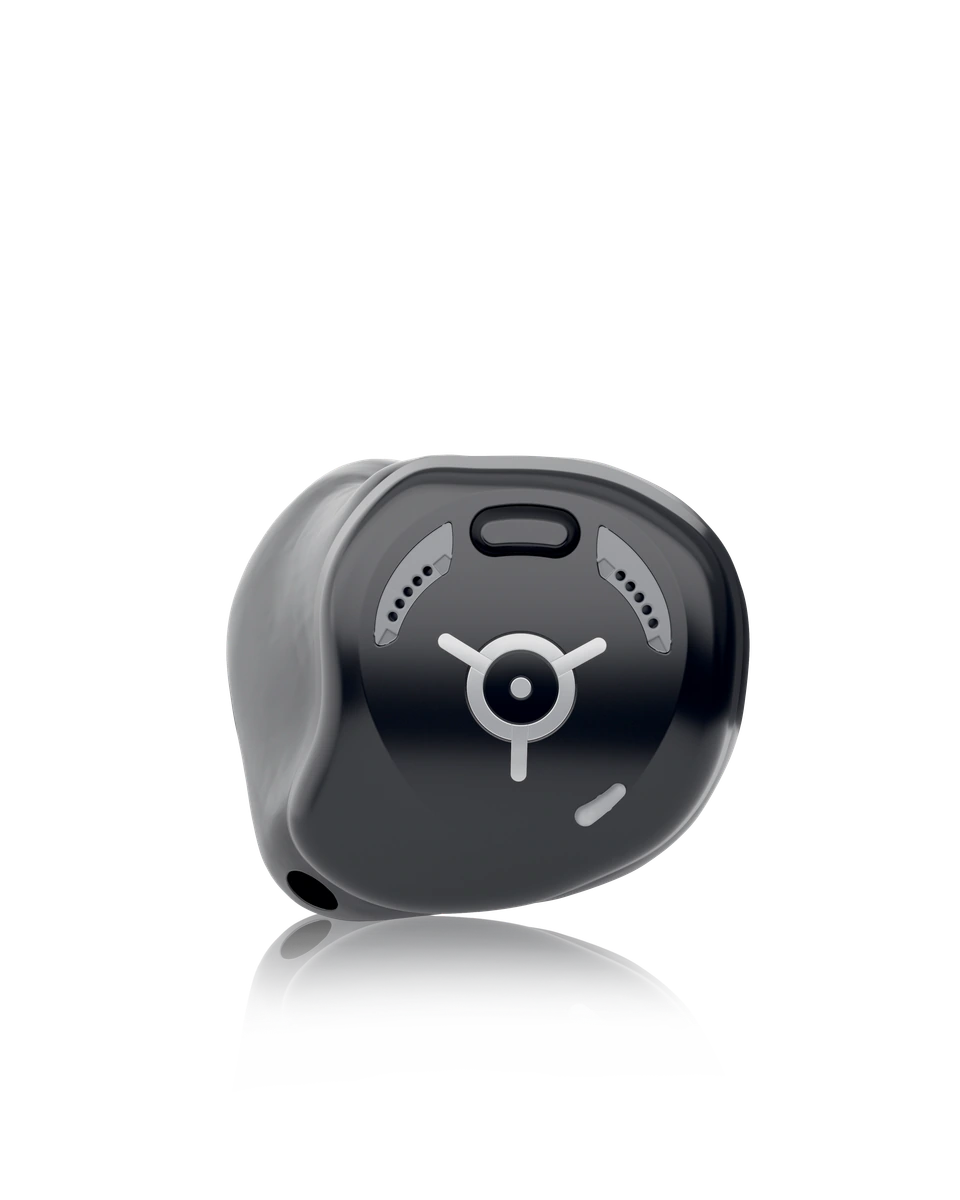
Comparing in-ear designs
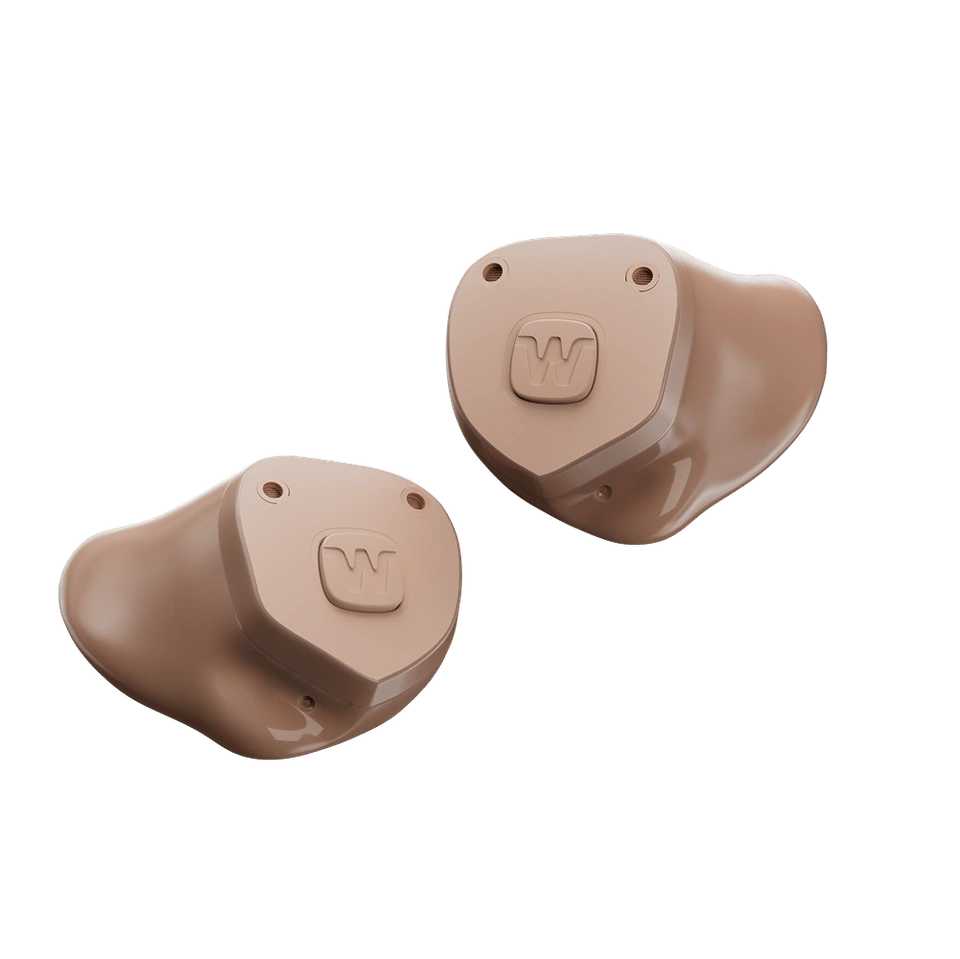
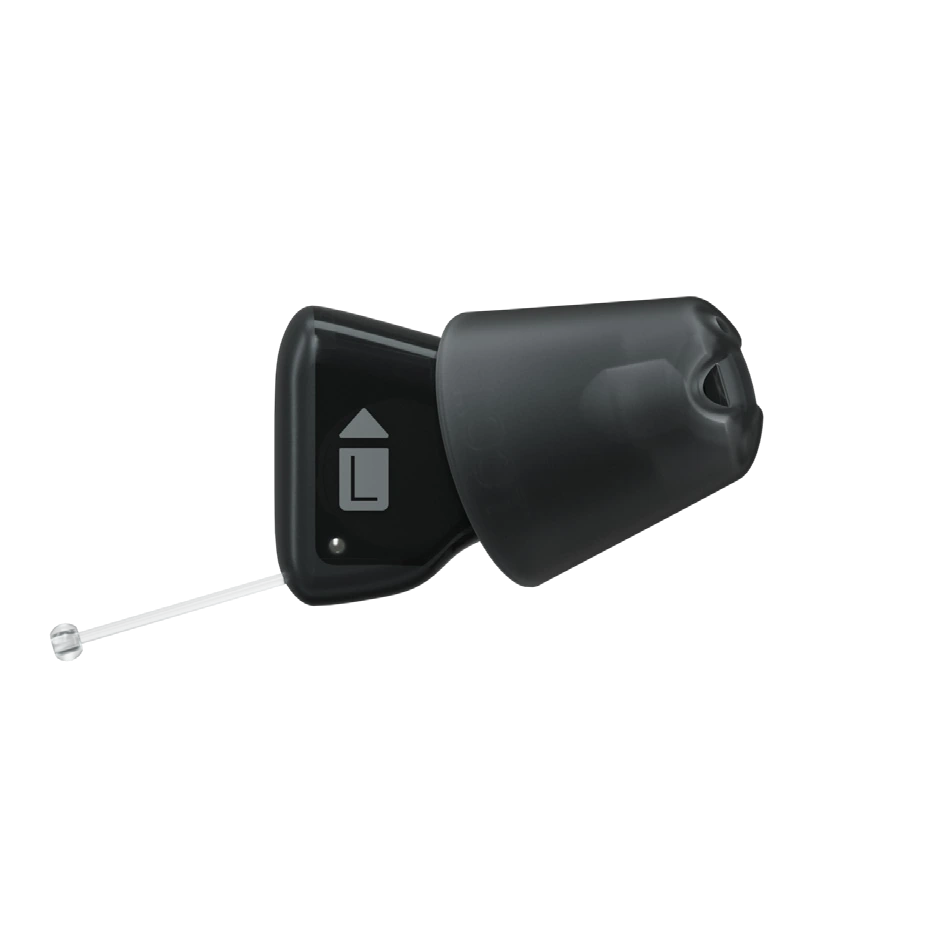
Official manufacturer images of different in-ear styles. In-ear does not necessarily mean invisible; fit and visibility depend on the device and your ear.
Check these details before you choose
“Small” does not tell you what a particular model can do. Have the audiologist demonstrate the functions you will actually use:
- Your phone: Can this exact model stream calls from your phone? Is an accessory required? Try a call rather than relying on a Bluetooth label.
- Power: Does it use a charger or disposable batteries? Practise the routine yourself, especially if small parts are difficult to handle.
- Controls: How do you change the volume or program? Ask what remains available when you do not have your phone with you.
- Maintenance: Ask for a demonstration of cleaning, filter changes and safe removal. Find out which tasks the office should handle.
- Busy places: Explain where you lose the conversation. Ask what this model offers for that situation and how you will judge whether it helps.
The FDA lists wireless connectivity, directional microphones and other features separately from style. Do not assume that every tiny hearing aid has them—or that a larger aid is automatically the better choice.
Give each option a fair comparison
Choose a few situations before your appointment: a work meeting, dinner with two friends, a phone call or talking beside someone on a walk. “I want to hear better” is a valid starting point, but a specific example makes the comparison more useful.
Ask how the fitting will be verified. Real-ear measurement checks amplified sound in your ear; it does not measure how invisible the device looks. Both questions deserve attention. ASHA includes verification and follow-up in its adult hearing-aid guidance.
Before ordering, get the proposed model, included care, trial conditions and any return or remake terms in writing. Ask what you can assess in the office and what requires a fitted device. An initial demonstration and an extended trial are not the same thing.
Considering discreet hearing aids in NYC?
At a hearing-aid consultation, tell us that appearance is a priority. Bring your phone, glasses and a short list of listening situations you want to improve. Pinnacle Audiology’s hearing-aid care in Midtown Manhattan starts with your hearing needs; a specific style should follow from that conversation.
Frequently asked questions
Are invisible hearing aids suitable for everyone?
No. Ear anatomy, hearing loss, comfort and handling can limit which canal styles are suitable. A hearing evaluation and ear examination help establish your options.
Link to this answerAre all invisible hearing aids rechargeable?
No. Power arrangements vary by model. Ask about the exact device being recommended and practise its charging or battery-changing routine before deciding.
Link to this answerCan a discreet hearing aid connect to my phone?
Some can, but connectivity varies by device and phone. Ask for a compatibility check and a demonstration with your own phone.
Link to this answerIs the smallest hearing aid the best one?
Not necessarily. A good choice also needs to meet your hearing needs, feel comfortable and be manageable every day. Compare those factors alongside appearance.
Link to this answerSources and further reading
- NIDCD: Hearing aids—styles, selection and questions to ask
- FDA: Types of hearing aids and available features
- ASHA: Hearing aids for adults
General patient education, not an individual hearing-aid recommendation. Your audiologist can assess which options fit your hearing and ears.
Get expert
hearing care.
Bring your questions and any hearing aids you already use. We can discuss your hearing, the fitting and the next step.