One hearing aid
or two?
A better ear is not always a normal-hearing ear. The right recommendation starts with understanding each ear separately.
One ear may feel noticeably better than the other. It is natural to wonder whether that means you only need one hearing aid. The answer starts with testing each ear, not with choosing a one-device or two-device package.
Why are two hearing aids often recommended?
The NIDCD explains that hearing with both ears supports speech understanding and locating sounds. That is why a recommendation for two aids is not simply a recommendation to turn everything up.
Think about a dinner where the speaker changes, or a meeting with people seated on either side. Those are different listening tasks from talking to one person directly in front of you. Describe both kinds of situations at your appointment. The goal is to find out what you need in your actual day, including the places where your better ear seems to manage.
Two devices are not a promise of effortless hearing. Hearing aids do not restore normal hearing, and noisy rooms can remain difficult. The FDA’s benefits-and-limitations guide is a useful starting point for realistic expectations.
When might one hearing aid be appropriate?
Some people have hearing loss in one ear and normal hearing in the other. ASHA notes that a conventional hearing aid helps some people with this pattern, while others need a different type of device. The amount and type of hearing loss determine which options are worth considering. See ASHA’s guide to unilateral hearing loss.
If you have been told that one ear has “poor hearing,” ask for a more specific explanation. Does that ear need amplification? What does its speech testing show? Is a conventional hearing aid appropriate? You should leave with an explanation for each ear, not just a device count.
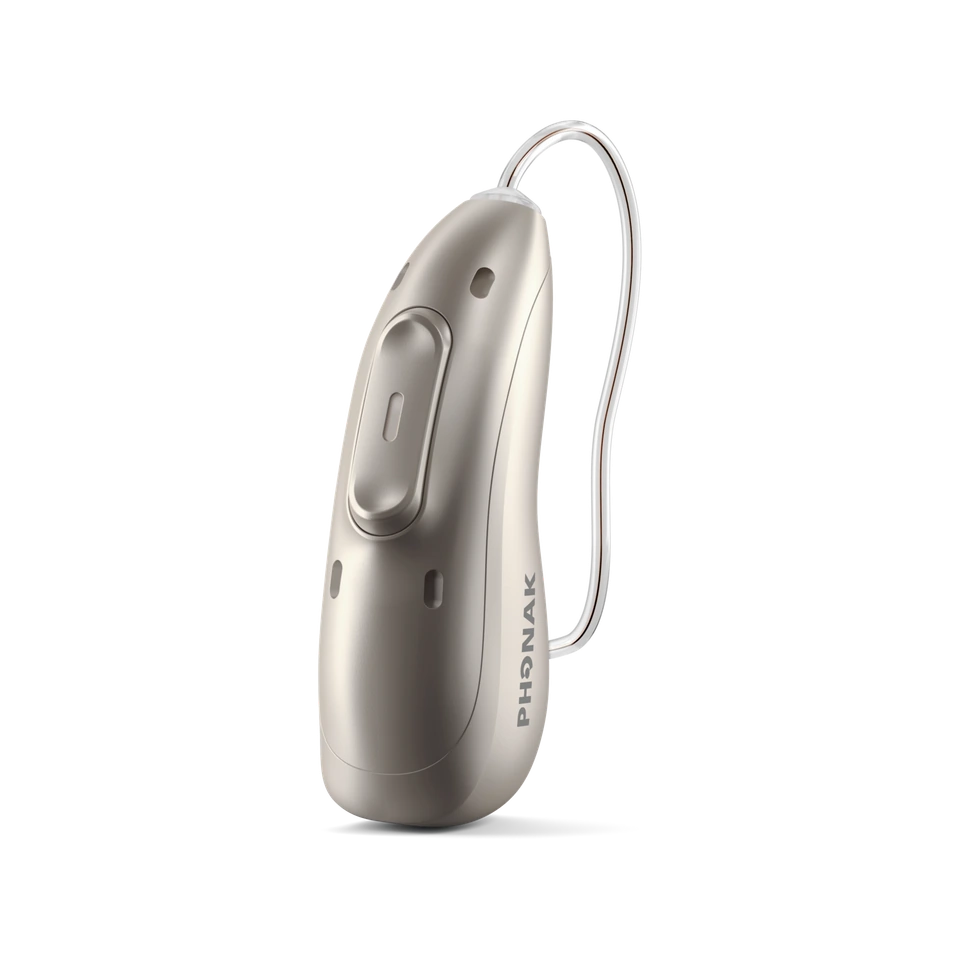
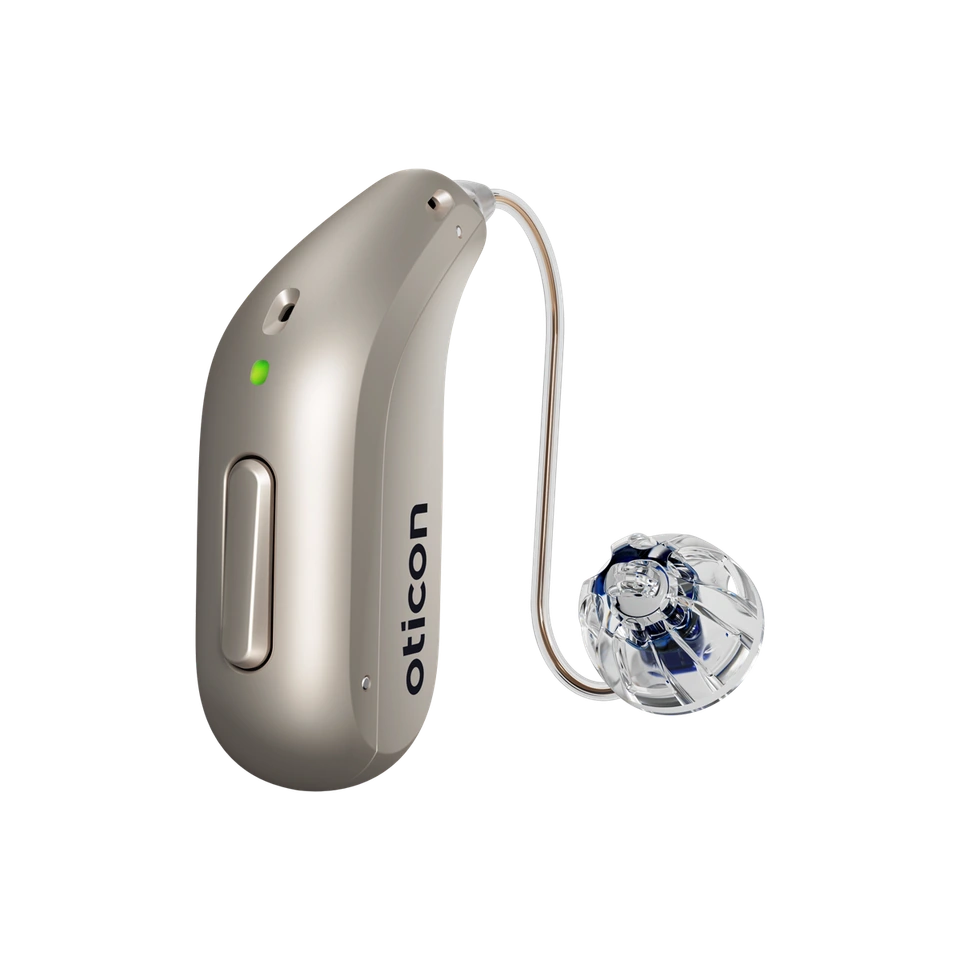
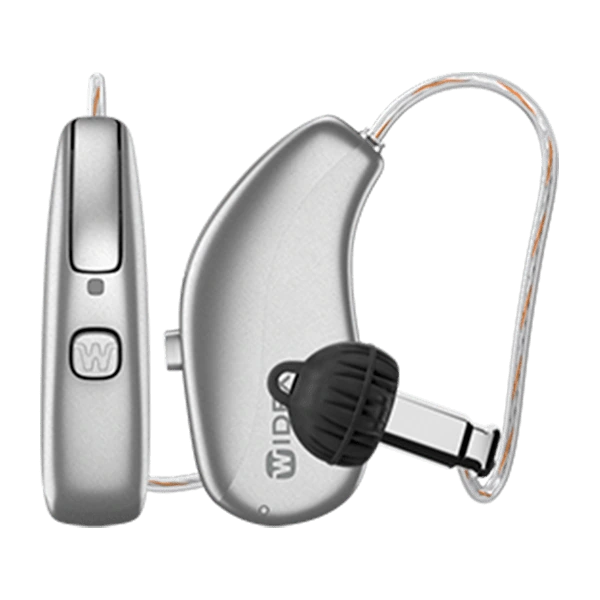
Hearing aids, up close
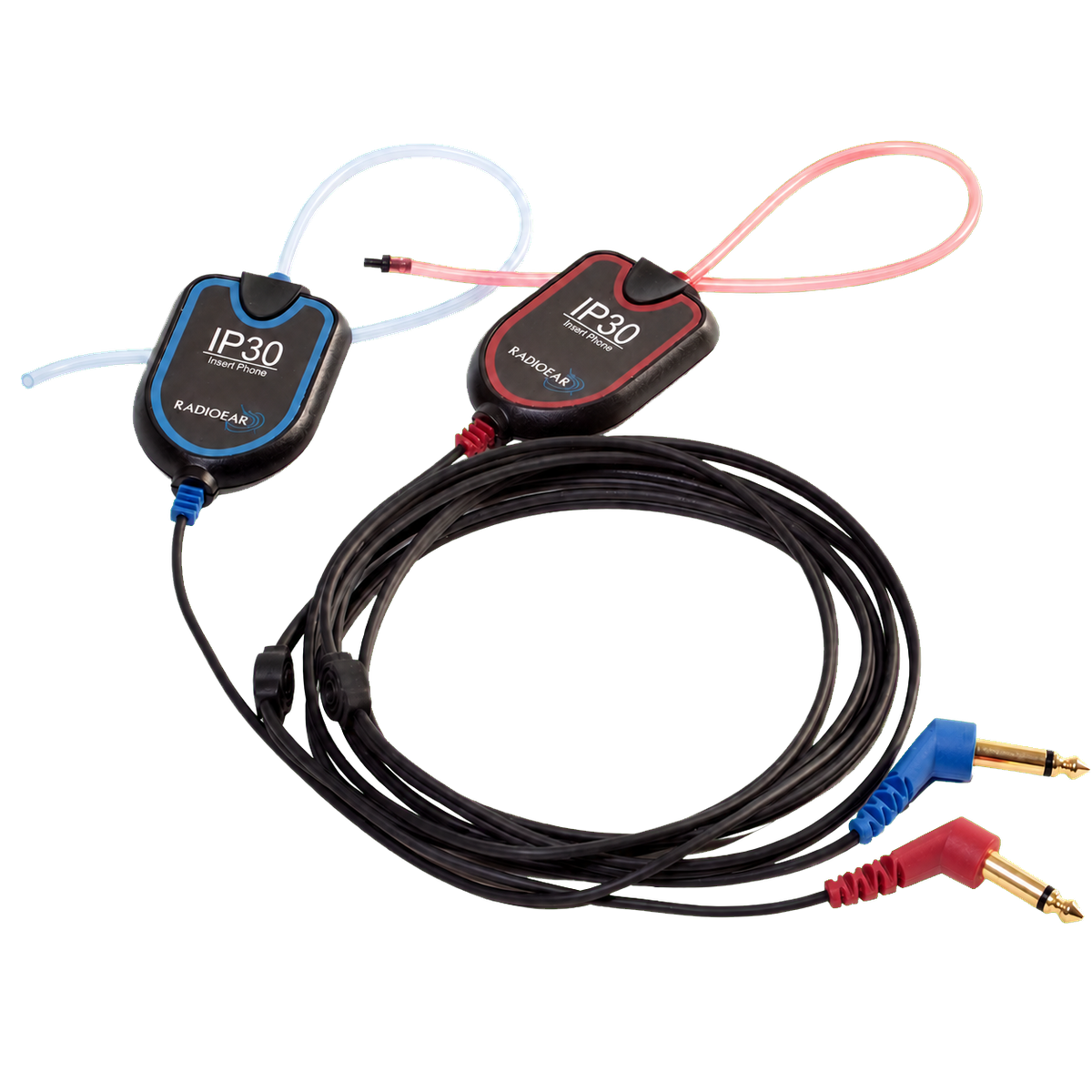
Official manufacturer images of prescription hearing-aid examples. These photographs identify the models shown, not a recommendation for your hearing or a guarantee of availability.
Is a CROS system the same as two hearing aids?
Not in the usual sense. A CROS system sends sound from the poorer-hearing side to the better-hearing ear. It may involve devices on both sides, but it does not mean both ears are receiving conventional amplification for usable hearing. Our single-sided deafness and CROS guide explains this separate decision.
When conventional amplification is not suitable for an ear, an audiologist may discuss other technologies or refer you for further evaluation. That discussion is different from choosing to wear only one of two recommended hearing aids.
Questions worth asking before you decide
- “What did you find in each ear?” Ask to see the results and have the differences explained in plain language.
- “Why are you recommending this arrangement?” The answer should connect your test findings to your listening needs.
- “How will we assess the benefit?” Ask which tests, everyday situations and follow-up appointments will help judge the result.
- “Can we discuss what makes me hesitant?” It might be comfort, appearance, managing two devices or the overall commitment. Bring that concern into the plan.
- “What if one side sounds wrong?” Ask how to report an imbalance and when to return for an adjustment.
ASHA’s adult hearing-aid guidance includes individual goals and assessment of outcomes. A useful comparison should therefore include more than whether the sound is louder in the office.
What if you already wear only one?
Bring the hearing aid you use, any second device you have and your previous hearing-test results. Explain why you stopped wearing one side, if that happened. “It whistles,” “my voice sounds strange” and “I cannot hear a difference” are different concerns and deserve different checks.
Do not quietly abandon a recommended device because an early fitting feels uneven. Equally, do not assume you must buy another device before the reason for the difficulty is clear. A hearing evaluation and a review of the existing fitting can help guide that conversation.
Frequently asked questions
Can I wear one hearing aid if both ears have hearing loss?
You may be able to, but two are generally recommended when both ears can benefit from amplification. Ask your audiologist to explain the expected tradeoffs for your hearing and listening situations.
Link to this answerDoes having a better ear mean I only need one aid?
No. Better does not necessarily mean normal. Testing each ear helps determine whether one or both ears could benefit.
Link to this answerDoes a CROS system restore hearing in the poorer ear?
No. A CROS system routes sound from the poorer-hearing side to the better-hearing ear. It is different from amplifying usable hearing in both ears.
Link to this answerWhere can I discuss one versus two hearing aids in NYC?
Pinnacle Audiology offers hearing evaluations and hearing-aid consultations in Midtown Manhattan. Bring any existing devices and previous hearing-test results so the discussion can include what you already use.
Link to this answerSources and further reading
- NIDCD: Hearing aids
- ASHA: Unilateral hearing loss
- ASHA: Hearing aids for adults
- FDA: Hearing-aid benefits and limitations
- NIDCD: Sudden deafness
This guide is general education. The number and type of hearing devices should follow an individual evaluation.
Get expert
hearing care.
Bring your questions and any hearing aids you already use. We can discuss your hearing, the fitting and the next step.