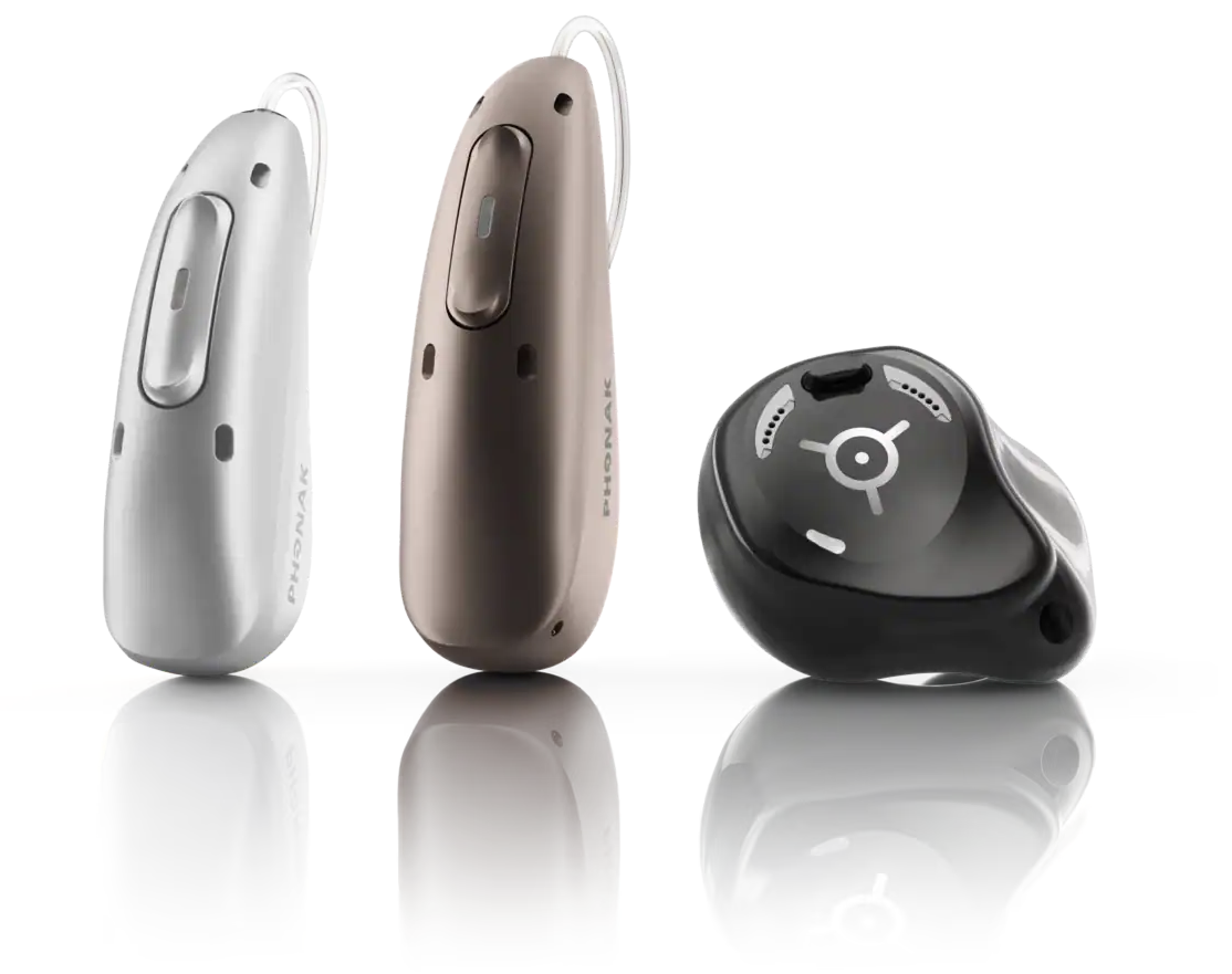
Hearing aids are more capable than ever, yet disappointment with them is still common. The apparent contradiction becomes easier to understand when we stop treating a hearing aid as a finished product and start viewing it as one part of an individualized hearing-care process.
Key Takeaways
- Hearing aids improve access to sound; they do not restore normal hearing or repair the inner ear.
- Benefit varies with the hearing loss, speech-understanding ability, listening environment, goals, and consistency of use.
- Selection, programming, real-ear verification, counseling, and follow-up all shape the result.
- Premium technology is not automatically the right choice; the right level depends on the person and the listening demands.
- A successful fitting is usually a process of measurement, adaptation, feedback, and refinement—not a single appointment.
Why the Reputation Persists
It is not uncommon to hear someone say, “My father had hearing aids, and they never worked,” or “My friend spent thousands of dollars, and the devices sit in a drawer.” Those experiences are real, and dismissing them does nothing to rebuild trust. But they do not prove that hearing aids, as a category, are ineffective.
A Cochrane systematic review of randomized trials1 found that hearing aids improved listening ability and hearing-related quality of life for adults with mild-to-moderate hearing loss. That is meaningful evidence, but it is not a promise that every device will work equally well for every person or in every situation.
Poor outcomes can emerge from many places: an incomplete evaluation, technology that does not match the patient’s needs, inaccurate or uncomfortable programming, unrealistic expectations, limited daily use, insufficient counseling, or too little follow-up. Sometimes the hearing loss itself places limits on speech clarity that amplification cannot overcome. In other cases, the device is capable, but the fitting has never been objectively verified in the person’s ear.
The most useful question, then, is not simply, “Do hearing aids work?” It is, “What has to go right for this person to benefit from hearing aids?”
Hearing Aids Provide Access to Sound—Not Normal Hearing
Perhaps the most important expectation to establish is also the simplest: hearing aids do not restore normal hearing.
Most hearing aids are used for sensorineural hearing loss, which commonly involves damage to sensory hair cells in the inner ear. A hearing aid picks up sound, processes it, and delivers an amplified signal to the ear. It cannot regenerate those cells or repair the auditory nerve. The National Institute on Deafness and Other Communication Disorders2 explains that amplification can make sound more accessible to surviving sensory cells, while also noting practical limits when inner-ear damage is more extensive.
That distinction matters. A patient may hear a voice more clearly with well-fit hearing aids and still have difficulty when several people speak at once, a restaurant is reverberant, or a speaker is across the room. The technology can improve the signal available to the auditory system; it cannot reconstruct information the ear no longer encodes accurately.
This is not a reason for pessimism. It is a reason for precision. Clear expectations allow a patient and audiologist to define what meaningful progress looks like: following a spouse at dinner, participating more comfortably in meetings, hearing grandchildren, reducing listening effort, or feeling more connected in daily life.
Not Every Hearing Loss Responds the Same Way
An audiogram is essential, but it does not tell the entire story. Two people with similar hearing thresholds can have very different speech-recognition scores, listening demands, dexterity, comfort preferences, cognitive resources, and histories with amplification.
Someone with mild hearing loss and good word recognition may notice a relatively quick improvement. A person with more severe loss may still gain meaningful access to conversation and environmental sounds, but clarity may remain limited. Another person may hear well in quiet while continuing to struggle in noise because the auditory system has difficulty separating competing signals.
These differences are why a hearing aid should not be selected from a shelf by audiogram alone. A comprehensive plan considers the medical and hearing history, speech understanding, communication priorities, physical fit, technology comfort, listening environments, and the patient’s own definition of success.
The American Speech-Language-Hearing Association’s adult hearing-aid guidance3 describes selection, fitting, verification, validation, counseling, and patient participation as parts of a multistep process. That framework is more realistic than the idea that a device can be chosen once and expected to solve every communication problem.
Noise Is the Hardest Test
Hearing is not simply a matter of volume. The brain must organize sound, identify speech, use context, and direct attention to what matters. Background noise makes each part of that task more difficult.
Modern hearing aids use directional microphones, noise-reduction systems, environmental classification, and other processing strategies to improve comfort or emphasize speech. These features can be valuable, but no hearing aid can isolate every desired voice in every acoustic environment. Distance, competing talkers, room reflections, and the listener’s own speech-processing ability still matter.
Good care therefore extends beyond programming. It may include seating strategies, improved lighting, reducing distance from a speaker, use of a remote microphone, communication-partner training, or changes to the room. These are not admissions that the hearing aids have failed. They are part of a complete communication plan.
The Audiologist’s Role Is More Than Choosing a Brand
People understandably compare manufacturers, feature lists, and price tiers. Yet two fittings of the same model can produce very different experiences.
The audiologist’s work begins with a comprehensive hearing evaluation and includes determining candidacy, identifying red flags that require medical referral, selecting an appropriate style and feature set, programming the devices, checking physical comfort, verifying output, teaching use and care, setting expectations, evaluating real-world benefit, and refining the plan over time.
This does not mean that professional care makes one brand universally superior or guarantees an outcome. It means the technology has to be translated into a fitting for a particular ear and a particular life.
The distinction is especially important now that adults with perceived mild-to-moderate hearing loss can purchase over-the-counter devices. The U.S. Food and Drug Administration4 distinguishes over-the-counter and prescription hearing aids and notes that properly fitted hearing aids and aural rehabilitation can help in many listening situations. Self-directed options may be appropriate for some adults; more complex losses, asymmetric symptoms, medical concerns, or difficult communication goals may call for professional evaluation and support.
Why Real-Ear Measurements Matter
Hearing-aid software begins with a prescription derived from the hearing test. That starting point is useful, but the manufacturer’s prediction is not a direct measurement of what reaches the eardrum.
Ear canals vary in length, shape, volume, and resonance. Domes and earmolds also change acoustics. As a result, the same programmed setting can produce different output in different ears.
Real-ear measurements—also called probe-microphone measures—address that uncertainty. During a clinically verified hearing-aid fitting, a thin probe tube is positioned in the ear canal while the patient wears the hearing aid. Calibrated speech-like sounds are presented, and the audiologist measures the hearing aid’s output near the eardrum. The settings can then be adjusted to approach evidence-based prescriptive targets across frequencies and input levels, while keeping loud sounds within appropriate limits.
ASHA identifies real-ear measures as the gold standard for hearing-aid fitting verification in its adult hearing-aid practice portal3. A systematic review and meta-analysis published in Trends in Hearing5 found positive effects of probe-tube verification compared with manufacturer initial-fit settings for speech intelligibility, self-reported listening ability, and user preference. The review also identified limitations in the available evidence, including outcomes that were not measured consistently. The fair conclusion is not that real-ear verification guarantees satisfaction; it is that it provides objective, patient-specific information that software prediction alone cannot provide.
In-Situ Measures Can Add Information, but They Are Not the Same Test
Some hearing aids offer in-situ audiometry, which estimates thresholds through the hearing aid receiver while the device is in the ear. This can be a useful adjunct, particularly when the audiologist wants another view of how the receiver, coupling, and ear interact.
In-situ results should still be interpreted in context. They do not replace a comprehensive diagnostic hearing evaluation, and they are not interchangeable with independent probe-microphone verification. Used thoughtfully alongside conventional testing, real-ear measures, patient feedback, and clinical judgment, they can help refine an individualized fitting.
One Programming Session Is Rarely the Whole Process
Hearing loss often develops gradually. During that time, the brain and the person’s habits adapt to a quieter acoustic world. When appropriately amplified sounds return, they may initially seem conspicuous: running water, paper, footsteps, dishes, traffic, or one’s own voice.
That early reaction does not automatically mean the hearing aids are too strong, and it should not automatically be ignored. The audiologist has to distinguish normal acclimatization from excessive output, an uncomfortable physical fit, occlusion, feedback, or settings that genuinely need adjustment.
There is no universal adaptation schedule. Some patients settle in quickly; others need more time and more deliberate refinement. Consistent use, within the plan agreed upon with the audiologist, gives the auditory system repeated exposure and gives the patient more useful observations to bring to follow-up visits.
The goal is not to make every sound disappear into the background on day one. It is to reach a setting that supports communication, remains comfortable, and can be used consistently in the environments that matter.
Counseling Is Clinical Care, Not an Extra
Programming answers only part of the patient’s problem. A person also needs to know what the devices can and cannot do, how to maintain them, what to expect during adjustment, and how to respond when a setting remains difficult.
Effective counseling may cover realistic goals, consistent use, hearing-aid care and cleaning, wax guards and domes, batteries or charging, telephone and streaming setup, difficult-listening strategies, family communication, and when to return for help. It also gives the patient permission to describe what is not working without feeling that they have failed.
ASHA’s guidance on aural rehabilitation for adults6 presents rehabilitation as a patient-centered combination of sensory management, instruction, training, counseling, and communication strategies. This broader view explains why a well-run fitting is more than a technology transaction.
Family members can play a useful role as well. Facing the listener, gaining attention before speaking, reducing distance, and avoiding conversations from another room can improve communication even with excellent hearing aids. The device and the people around it work together.
Technology Should Follow the Lifestyle
The most expensive technology is not automatically the best choice for every patient. Advanced processing may be valuable for a person who spends substantial time in complex, changing noise. Someone whose priorities center on quiet conversation, television, and a small number of familiar environments may do very well with a different technology level.
A randomized trial comparing basic and premium hearing aids in older first-time users7 illustrates why feature tier alone should not be treated as a shortcut to outcome. Selection should begin with the communication demands, not with the highest price point.
Other practical considerations can be just as important: rechargeable versus disposable batteries, physical handling, smartphone compatibility, telecoil or remote-microphone needs, ear-canal comfort, retention, and the availability of follow-up care.
Follow-Up Turns a Fitting Into Care
Delivery is a milestone, not the end of treatment. Follow-up allows the audiologist and patient to compare the clinical fitting with everyday experience.
Useful follow-up may include checking device function, reviewing data logging, repeating or refining verification, adjusting programs, addressing comfort, replacing worn components, coaching communication strategies, and using validated questionnaires to document benefit. Hearing should also be monitored over time because thresholds and health needs can change.
This process should be purposeful rather than endless. Each visit should answer a question: Is speech sufficiently audible? Are loud sounds comfortable? Is the patient using the devices? Which environments remain difficult? Does another accessory or strategy make more sense than additional gain?
Success is not simply leaving the office with a pair of hearing aids. It is creating a plan that remains useful after the novelty of the fitting has passed.
Hearing-Aid Success Is a Partnership
The strongest fittings combine objective measurement with honest patient feedback. The audiologist brings technical and clinical expertise; the patient brings the lived experience of work, family, social life, comfort, and priorities.
That partnership may include wearing the devices consistently, returning for planned follow-up, describing both improvements and frustrations, practicing communication strategies, involving a spouse or family member when helpful, and remaining open to reasonable adjustment.
At Pinnacle Audiology, we believe hearing-aid care should be guided by evidence-based practices rather than assumptions. Comprehensive diagnostic testing, individualized counseling, real-ear measurements, in-situ verification when appropriate, and continued follow-up are components of that approach. The purpose is not simply to deliver technology. It is to help each patient use amplification more confidently and pursue the communication goals that matter to them.
The Bottom Line
Hearing aids do not deserve to be dismissed, but neither should they be oversold. They are sophisticated medical devices with meaningful evidence of benefit, practical limitations, and outcomes that vary from person to person.
When a disappointing experience is blamed entirely on “bad hearing aids,” the more useful questions may be whether the devices were appropriate, whether the fitting was verified, whether expectations were clear, and whether the patient received enough support to adapt and refine the result.
Technology is part of the equation. Care is the process that makes the technology personal.
Frequently Asked Questions
Do hearing aids restore normal hearing?
No. Hearing aids process and amplify sound to make it more accessible to the hearing that remains. They do not regenerate inner-ear sensory cells or recreate normal hearing. A well-fit device can still provide meaningful improvement in communication and listening ability.
How long does it take to adjust to hearing aids?
There is no single timeline. Some people adapt quickly, while others need several weeks of consistent use and one or more follow-up adjustments. Comfort, hearing history, daily listening environments, and the fitting itself all influence the process. Sudden pain, feedback, or intolerable loudness should be discussed with the audiologist rather than simply endured.
What are real-ear measurements?
Real-ear measurements use a thin probe microphone in the ear canal to measure the sound a hearing aid delivers near the eardrum. The audiologist compares that output with evidence-based targets and adjusts the device as needed. This verifies the individual fitting instead of relying only on the manufacturer’s software prediction.
Are premium hearing aids always better?
No. More advanced technology can be useful for complex listening demands, but it is not automatically the best value or best fit for every person. Hearing loss, speech understanding, lifestyle, physical needs, connectivity preferences, and follow-up support should guide the recommendation.
Clinical Sources
- Cochrane systematic review of randomized trials
- National Institute on Deafness and Other Communication Disorders
- American Speech-Language-Hearing Association’s adult hearing-aid guidance
- U.S. Food and Drug Administration
- systematic review and meta-analysis published in Trends in Hearing
- guidance on aural rehabilitation for adults
- randomized trial comparing basic and premium hearing aids in older first-time users
This article is for general educational purposes and is not a diagnosis or a substitute for individualized medical care.
Begin with a
thoughtful evaluation.
Meet with Pinnacle Audiology’s doctoral team for careful testing, clear explanations, and recommendations built around your hearing and daily life.