
Most people arrive at their first hearing aid fitting with one of two mindsets. Some approach it pragmatically, having spent years aware of their hearing difficulty and ready to act. Others arrive reluctantly, having been convinced by a spouse, child, or physician.
Hearing aids are not corrective lenses. Putting them in and immediately hearing the way you did twenty years ago is not what happens, not because the technology isn't capable, but because the auditory brain requires time, recalibration, and support to use amplified sound effectively.
The Diagnostic Evaluation: Where Everything Starts
The hearing aid journey properly begins not at the fitting, but at the diagnostic evaluation. A thorough evaluation establishes the degree and configuration of hearing loss across frequencies, assesses speech recognition ability, evaluates the integrity of the middle ear system, and explores the patient's communication needs, lifestyle, and listening priorities.
A patient with a moderate, flat sensorineural hearing loss and excellent word recognition scores will have a very different prognosis than a patient with the same audiometric thresholds but markedly reduced speech recognition in noise.
The Fitting Appointment: What to Expect and What to Ask
The initial fitting appointment is typically sixty to ninety minutes. The audiologist programs the hearing aids to a prescriptive target, most commonly NAL-NL2 or DSL v5, and verifies that the devices are delivering the prescribed gain using a procedure called real-ear measurement. In this procedure, a thin probe tube is placed in the ear canal alongside the hearing aid, and a small microphone measures the actual sound level reaching the eardrum.
After verification, the audiologist will typically start the devices at a reduced gain setting, perhaps 70 to 80 percent of the full prescription, and plan to increase progressively over subsequent visits. This stepped acclimatization approach is supported by research showing that patients adapt more successfully when gain is introduced gradually.
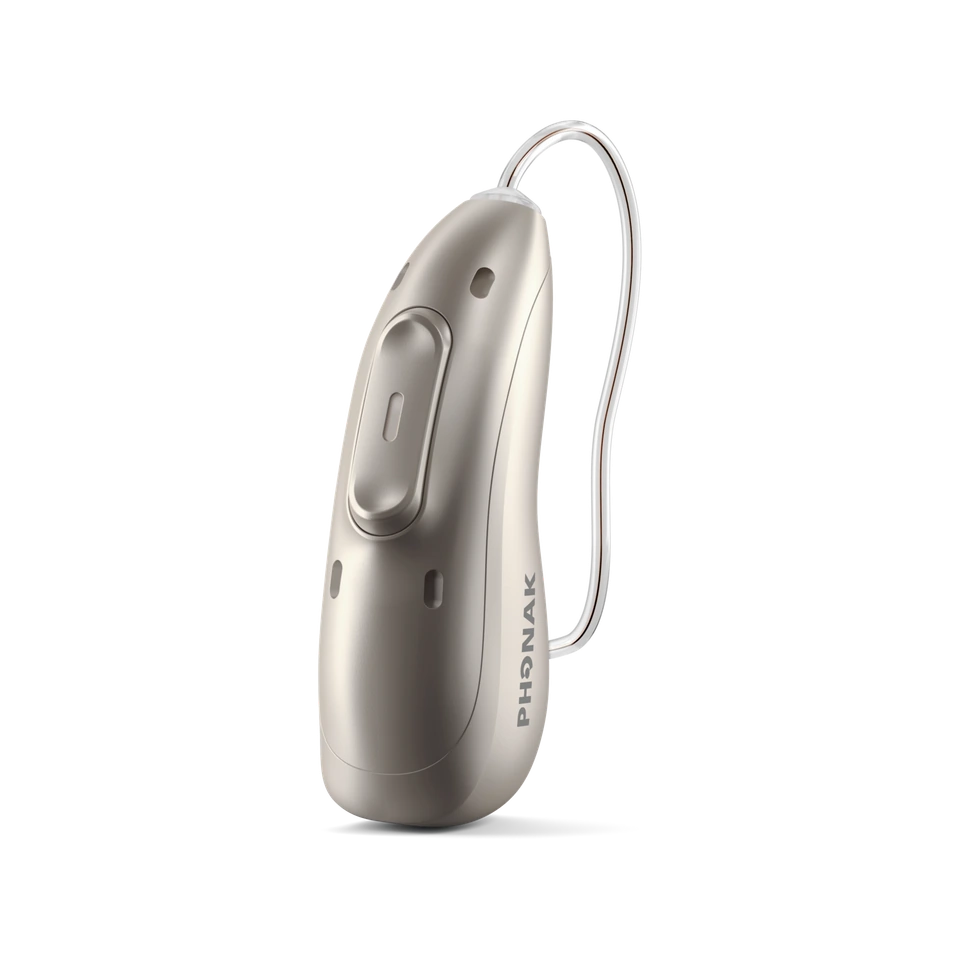
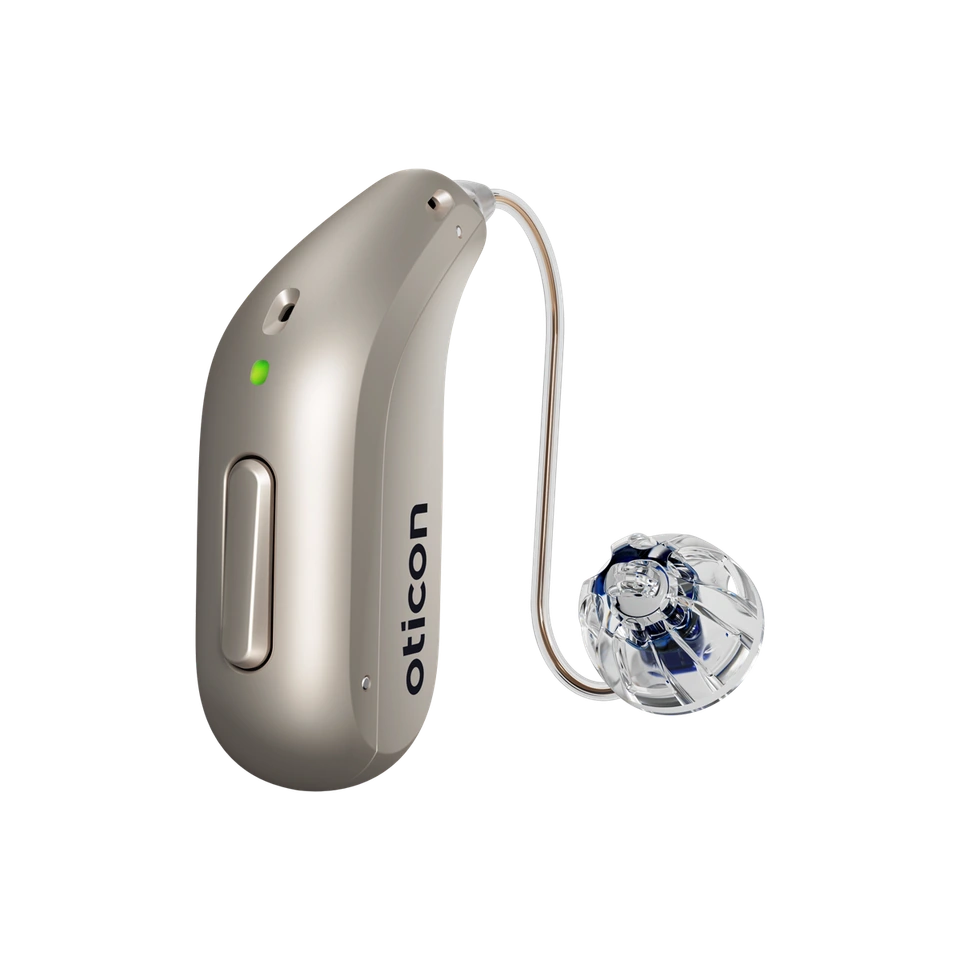
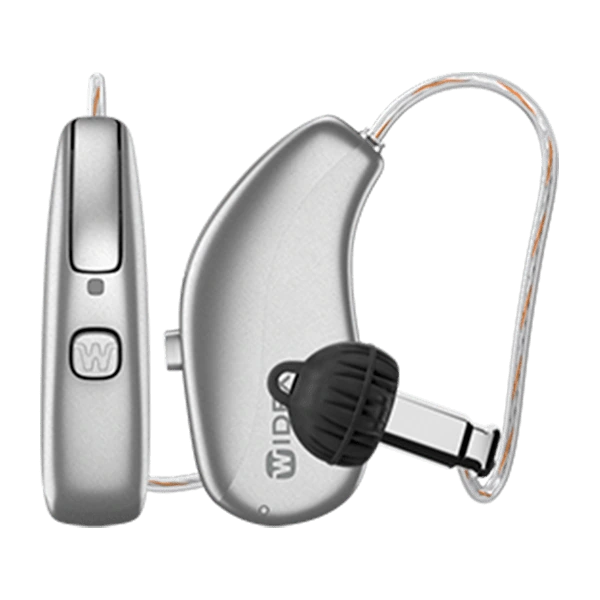
Hearing aids, up close
Official manufacturer images of prescription hearing-aid examples. These photographs identify the models shown, not a recommendation for your hearing or a guarantee of availability.
The Adjustment Period: Weeks Two Through Eight
The weeks immediately following the initial fitting are the most critical and the most commonly misunderstood phase of the hearing aid experience. Patients frequently report that their own voice sounds strange or hollow, that ambient sounds like paper rustling, keyboards, and footsteps seem disproportionately loud, and that the effort of listening is still significant even with devices in place.
The occlusion effect, the hollow or boomy quality that many patients perceive in their own voice, occurs when the ear canal is partially or fully blocked by the hearing aid dome or custom shell. The perception of certain environmental sounds as disproportionately loud reflects the auditory cortex recalibrating to inputs it has been deprived of, sometimes for years.
During this period, consistent daily wear is essential. The goal is full-day wear in as many environments as possible.
Follow-Up Care: The Engine of Long-Term Success
A standard follow-up schedule in our practice includes appointments at two weeks, six weeks, three months, and then annually, with additional visits as needed in between. At the two-week visit, the audiologist reviews wear time, asks about specific challenging environments, and adjusts gain if indicated. The six-week visit is often the most productive, patients have had enough experience to identify patterns. The three-month comprehensive visit includes re-verification of real-ear measures after all adjustments.
Long-Term Maintenance and When to Upgrade
Most modern hearing aids are rated for three to five years of reliable daily wear under normal conditions, though with good care, many continue to perform well beyond that window. Annual audiological evaluations are important not only for monitoring changes in hearing, but for ensuring that the hearing aid prescription remains appropriate.
Technology in hearing aids advances meaningfully on approximately a three-to-five-year cycle, with each generation bringing real improvements in noise management, sound quality, streaming capability, and battery life. The decision to upgrade should be based on whether the current devices continue to meet the patient's audiometric and lifestyle needs, not on marketing alone.
The hearing aid journey is not a purchase event, it is the beginning of an ongoing clinical relationship.
Understanding this from the start changes everything. The patients who succeed with hearing aids are not the ones who bought the most expensive device; they are the ones who stuck with the process, wore the devices daily through the adjustment weeks, and worked with their audiologist through follow-up. At Pinnacle Audiology in New York City, we treat the journey as exactly that, a partnership, so that your first fitting is the beginning of years of better hearing, not a one-time transaction.
References
- Lin, F.R., Pike, J.R., Albert, M.S., et al. (2023). "Hearing intervention versus health education control to reduce cognitive decline in older adults with hearing loss (ACHIEVE): a multicentre, randomised controlled trial." The Lancet. 402(10404):786–797.
- Picou, E.M. (2022). "Hearing aid benefit and satisfaction results from the MarkeTrak 2022 survey." Seminars in Hearing. 43(4):301–316.
- Humes, L.E. (2023). "An evidence-based review of the effectiveness of hearing aids and the role of the audiologist." Journal of Speech, Language, and Hearing Research. 66(5):1718–1746.
- Keidser, G., Dillon, H., Carter, L., & O'Brien, A. (2020). "NAL-NL2 empirical adjustments." Trends in Amplification / International Journal of Audiology (prescriptive fitting evidence).
Clinical Sources
Get expert
hearing care.
Comprehensive evaluation, honest guidance, and long-term support, from New York's leading independent audiology practice.