In August 2022, the U.S. Food and Drug Administration finalized a rule creating a new category of over-the-counter hearing aids that could be sold without a prescription, professional evaluation, or audiologist involvement. The stated goal of the regulation was to improve access to hearing care for the estimated 30 million Americans with hearing loss who were not seeking or obtaining treatment. But the OTC category has also generated significant confusion among consumers about what these products do, who they are appropriate for, and what they cannot replace.
What the OTC Category Was Designed For
The FDA's OTC hearing aid rule specifically targets adults 18 years and older with perceived mild to moderate hearing loss. The regulatory framework explicitly excludes children, adults with severe or profound hearing loss, and anyone with certain medical conditions, sudden hearing loss, asymmetric hearing loss, active ear pain, drainage, or tinnitus of recent onset.
The key phrase is "perceived mild to moderate hearing loss." The regulation is based on the consumer's self-assessment of their hearing, not on an audiometric evaluation. Multiple studies have shown that adults systematically underestimate the degree of their hearing loss, particularly in the early and moderate stages when the gradual nature of the decline makes the change difficult to perceive introspectively.

The Clinical Case for Professional Evaluation First
The audiological evaluation that precedes a prescription hearing aid fitting is not a formality, it is a diagnostic process with real clinical implications. Approximately 5 to 10 percent of adults who present for audiological evaluation have medically significant pathology identified during the assessment: asymmetric sensorineural hearing loss that warrants imaging to rule out vestibular schwannoma, unilateral conductive loss suggesting otosclerosis, sudden sensorineural hearing loss requiring urgent medical management, or aural fullness with low-frequency threshold change consistent with endolymphatic hydrops.
Beyond the identification of medical pathology, the audiometric evaluation establishes the specific configuration and degree of loss that determines what amplification prescription is appropriate. An OTC hearing aid, by definition, cannot be programmed to an individual audiogram, it relies on generic amplification curves or simplified self-fitting adjustments.
What OTC Products Can and Cannot Do
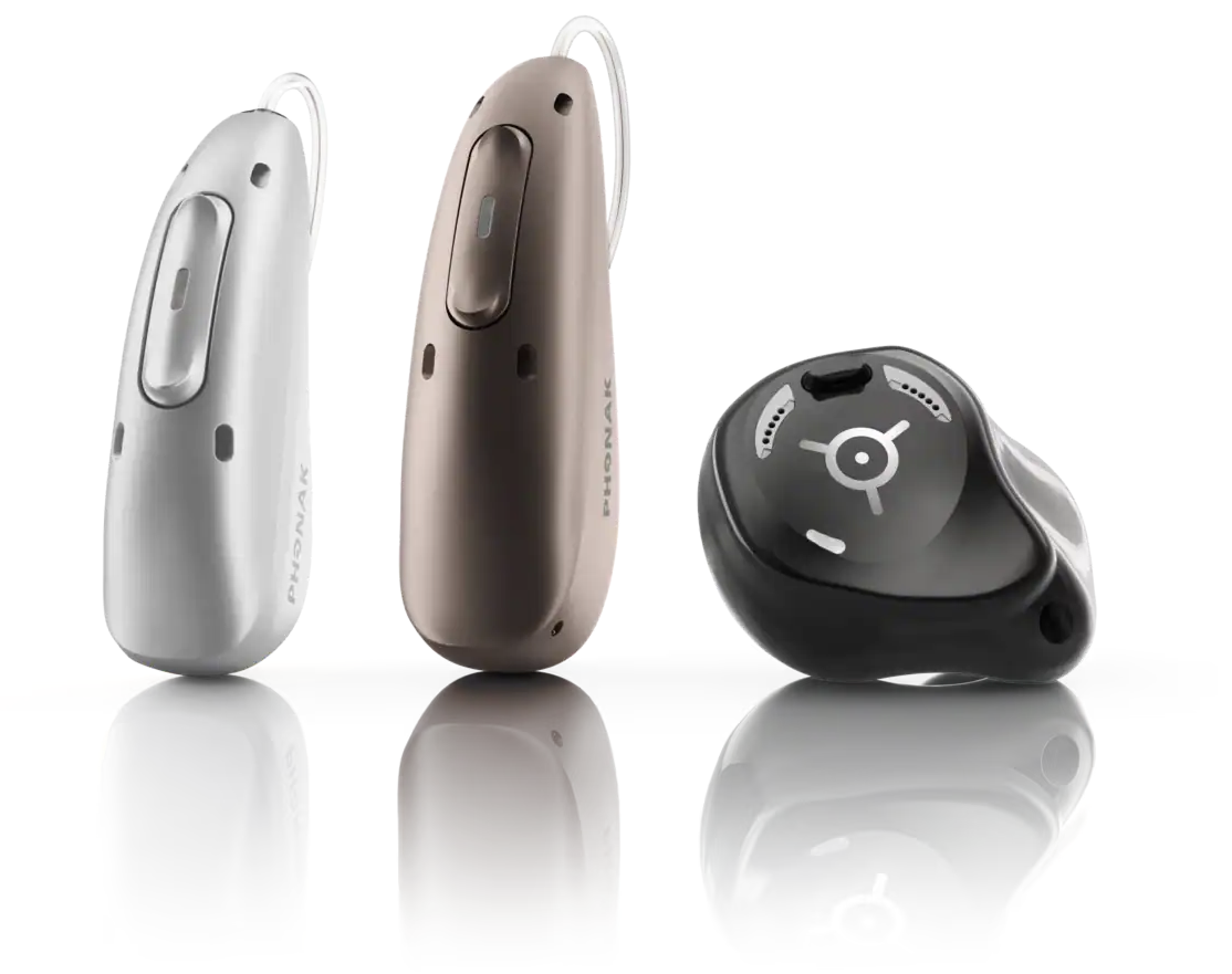
OTC hearing aids vary considerably in their technology, quality, and sophistication. Some, such as products from Sony and Jabra, represent genuine hearing health technology developed by established manufacturers and offer reasonable performance for mild, high-frequency loss in quiet conditions. Others are amplifiers with limited sound processing and poor noise management.
A pair of OTC hearing aids typically costs between $200 and $1,600, substantially less than prescription hearing aids, which range from approximately $1,500 to $7,000 per pair at current market rates. For a person with documented mild hearing loss who has already undergone audiological evaluation, an OTC product may be a reasonable choice.

Real-Ear Measurement and Why It Matters
One of the most significant clinical differences between prescription and OTC hearing aid fittings is real-ear measurement verification. In a professional fitting, the audiologist places a thin probe microphone in the ear canal to confirm that the device is delivering the prescribed acoustic gain at each frequency. Without measurement, the fitting is based on the manufacturer's generic prediction, which research shows matches the real-ear target only about a third of the time.
What the Latest Research Actually Shows
It would be easy to read all of this as "OTC devices are bad." The research says something more interesting, and more useful. Fewer than one in five American adults who could benefit from hearing aids actually use them, and cost and access are among the biggest reasons why. The OTC category exists to close that gap, and the early evidence on the devices themselves is genuinely encouraging.
In a 2023 randomized clinical trial published in JAMA Otolaryngology, Head and Neck Surgery, adults with self-reported mild to moderate hearing loss who fit a quality OTC device themselves, with remote support, achieved outcomes at six weeks that were comparable to those fitted by an audiologist using best practices. A 2024 follow-up of the same participants found those benefits largely held at eight months. The hardware, in other words, is not the weak link.
That deserves to be stated plainly: for the right person, with a confirmed mild to moderate loss and a well-designed device, OTC hearing aids can work. But notice the conditions baked into that sentence. Those participants already knew the type and degree of their loss, they used vetted devices, and they had professional support available when they got stuck. The question is never whether a good OTC device can amplify sound. It is whether you are the person it was designed for, and the only reliable way to know that is an evaluation.
The audiological profession's position is not that OTC hearing aids have no value, it is that they are not a substitute for evaluation, and that the decision about which path is appropriate should be an informed one. The evaluation is the investment; the device is the implementation.
References
- U.S. Food and Drug Administration. (2022). "Medical Devices; Establishing Over-the-Counter Hearing Aids." Federal Register, Final Rule (effective October 17, 2022).
- De Sousa, K.C., Manchaiah, V., Moore, D.R., Graham, M.A., & Swanepoel, D.W. (2023). "Effectiveness of an over-the-counter self-fitting hearing aid compared with an audiologist-fitted hearing aid: a randomized clinical trial." JAMA Otolaryngology, Head & Neck Surgery. 149(6):522–530.
- De Sousa, K.C., Manchaiah, V., Moore, D.R., Graham, M.A., & Swanepoel, D.W. (2024). "Long-term outcomes of self-fit vs audiologist-fit hearing aids." JAMA Otolaryngology, Head & Neck Surgery (published online July 11, 2024).
- Nieman, C.L., & Lin, F.R. (2023). "Expanding access to hearing health care for adults with hearing loss." JAMA Otolaryngology, Head & Neck Surgery. 149(2):89–90.
Clinical Sources
Get expert
hearing care.
Comprehensive evaluation, honest guidance, and long-term support, from New York's leading independent audiology practice.