Protecting the Ears That Shape the Music:
A Guide to Hearing Protection for Musicians
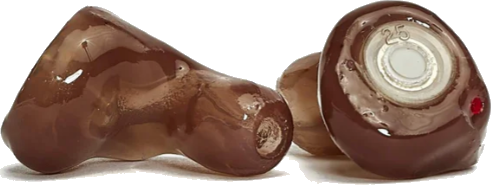
Custom high-fidelity earplugs, in-ear monitors, and sound monitoring, how professional musicians in New York preserve their hearing without compromising their art.
Musicians occupy a peculiar position in the landscape of noise-induced hearing loss. They are among the most noise-exposed occupational groups in the developed world, with regular exposure to sound levels that would trigger mandatory hearing protection requirements under OSHA standards in any other workplace.
This matters especially in a music city like New York, where pit musicians, touring artists, recording engineers, club DJs, and music teachers spend their careers inside loud rooms. The very skill that defines them, exquisitely tuned hearing, is also their most exposed asset. Protecting it is not a luxury; it is career preservation. The World Health Organization now estimates that more than a billion young people worldwide are at risk of avoidable hearing loss from unsafe listening, and professional musicians sit at the highest-exposure end of that spectrum.
The Epidemiology of Hearing Loss in Musicians
A 2014 analysis of German occupational health data covering over 2,000 musicians found that professional musicians were approximately 3.6 times more likely to develop noise-induced hearing loss, 57 percent more likely to develop tinnitus, and four times more likely to develop hyperacusis (loudness sensitivity) than matched non-musicians.
Noise-induced damage disproportionately affects the basal turn of the cochlea, which processes the frequencies around 4,000 Hz, outside the range of most musical content, which means early loss is not reflected in the musician's perception of their own musical hearing. Tinnitus may be the first symptom that something has changed.
That delayed warning is exactly why prevention beats reaction. By the time a musician notices their hearing has changed in the frequencies that matter to their craft, significant and permanent damage has usually already occurred in the regions that warn earliest. The goal of a hearing-conservation plan is to act in that silent window, before the loss becomes audible.

The Problem with Standard Hearing Protection
Standard foam earplugs can provide meaningful protection when inserted correctly, but their sound and fit differ from filtered musician plugs. For performers, the practical question is not whether foam works; it is whether the protection is consistent and the music remains usable. Our custom earplugs vs foam comparison separates protection, fit, comfort, sound clarity, reuse, and cost.
Custom Musician's Earplugs: The Clinical Solution
Custom musician's earplugs use a filtered design that achieves flat attenuation across the frequency range relevant to music, typically providing 9, 15, or 25 dB of broadband reduction while preserving the relative balance of frequencies, the dynamic nuance between soft and loud passages, and the spatial character of the sound.
The leading manufacturers of custom filtered musician's earplugs include Etymotic Research (whose ER-15 and ER-25 filters provide 15 and 25 dB of flat attenuation respectively), Sensaphonics, and Westone, among others. A pit orchestra musician performing in a Broadway theater may be adequately protected by a 15 dB filter, while a drummer in a rehearsal studio where sound pressure levels may reach 110 to 115 dB SPL requires the full 25 dB filter.
The fit is what makes or breaks the result. Custom plugs are made from precise impressions of each ear, so the seal is exact, the comfort allows all-night wear, and the acoustic filter performs as designed. An audiologist matches the attenuation level to the specific instrument, venue, and role, the choices a drummer, a violinist, and a front-of-house engineer need are not the same. This is why a professional fitting, rather than a generic off-the-shelf plug, is the standard of care for working musicians.

In-Ear Monitors as Hearing Protection
Professional in-ear monitors (IEMs), custom-molded earpieces that receive a direct mix from the stage sound system, serve a dual function for many performing musicians. Because IEMs deliver a controlled mix directly to the ear, performers can achieve adequate monitoring at much lower levels than would be required from floor monitors, and they simultaneously provide the passive noise isolation of a custom earplug shell, typically 20 to 26 dB of passive attenuation.
Tinnitus in Musicians: Recognition and Management
Survey studies of professional orchestral musicians have found tinnitus prevalence rates of 50 percent or higher. Among popular music performers, the rates are similar or higher. For many musicians, tinnitus is intermittent in early stages, present after a loud rehearsal, resolved by the next morning, but becomes persistent with cumulative exposure.
There is no cure for tinnitus caused by hair cell or synaptopathic damage, but effective management can substantially reduce its impact on quality of life, sleep, and professional function. The most important intervention, however, is the one that prevents tinnitus from progressing: consistent use of appropriate hearing protection before the damage accumulates.
If you make your living, or your joy, with sound, a hearing-conservation plan is one of the smartest investments you can make. At Pinnacle Audiology in New York City, we work with performers, producers, and music lovers to fit custom musician’s earplugs and in-ear monitors, establish a baseline of your hearing, and monitor it over time, so you can keep doing what you love, for as long as you love it.
References
- World Health Organization. (2022). Global Standard for Safe Listening Venues and Events. Geneva: WHO.
- Couth, S., Prendergast, G., Guest, H., et al. (2020). "Investigating the effects of noise exposure on self-report, behavioral and electrophysiological indices of hearing damage in musicians with normal audiometric thresholds." Hearing Research. 395:108021.
- National Institute on Deafness and Other Communication Disorders. (2022). Noise-Induced Hearing Loss. NIDCD, NIH.
- Schink, T., Kreutz, G., Busch, V., Pigeot, I., & Ahrens, W. (2014). "Incidence and relative risk of hearing disorders in professional musicians." Occupational and Environmental Medicine. 71(7):472–476.
Clinical Sources
Get expert
hearing care.
Comprehensive evaluation, honest guidance, and long-term support, from New York's leading independent audiology practice.